

Key Summary
- Original notarizationThis is a method of attaching a notary's confirmation to the original document itself.
- Copy notarizationThis is a method to confirm that the copy is the same as the original.
- Notarization of factsThis is a method of stating and receiving confirmation that what is written in the document is true.
- CautionOriginal recovery, cost, and local recognition vary depending on the method, so you must first check the submission destination requirements.

There are frequently asked questions. “They ask me to get it notarized. Is it the original notarization or the copy notarization? What is factual notarization?”
As you proceed with document authentication, these three things keep appearing. It's easy to get confused because the names are similar, but in reality, the things they identify are different. If you receive it incorrectly, it may not be recognized locally or you may not be able to get the original back.
In this article, we will explain what each of the three notarizations confirms and which one is received in what cases.
Original notarization is attaching a notarization to the document itself.

Original notarization is a method of attaching a notary's confirmation directly to the original document.
It is mainly used when converting a document written by a company or individual into a document with public effect. This includes documents such as contracts, powers of attorney, affidavits, and consent forms. These documents are originally private documents and have no official effect in and of themselves, but if they are notarized, they can proceed to the Apostille or consular authentication stage.
What you need to know here is that if you notarize the original, the original becomes part of the notarized document. Since the notary office attaches the notarization to the original to form one document, the original cannot be removed and used elsewhere. If you need the same original in multiple places, you will need to prepare accordingly.
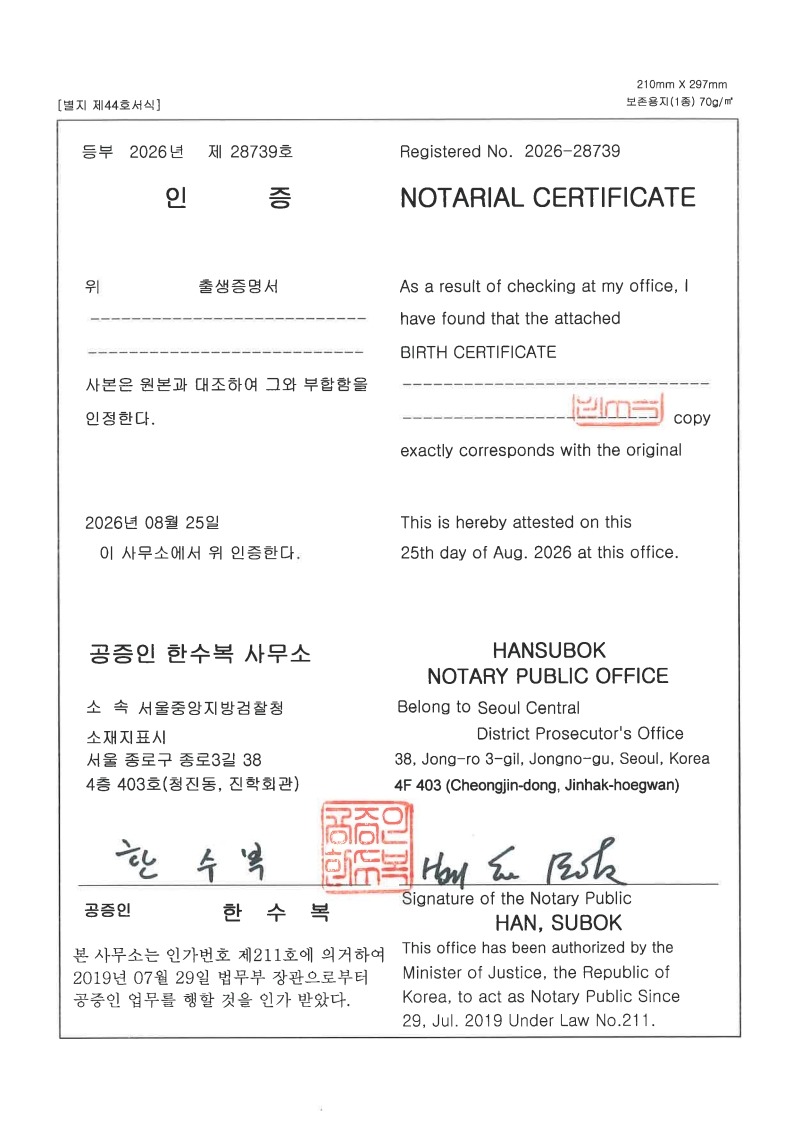
Copy notarization is confirmation that the copy is the same as the original.

Copy notarization is a method of verifying that the two documents are the same by comparing the copy with the original.
Used when it is difficult to submit the original or when the original must be left on hand. For example, you cannot submit the original passport, so make a copy and have it notarized. The same applies to cases where you need to keep the only original copy, such as a diploma or certificate.
The advantage of copy notarization is that you can keep the original. However, if the submission destination requires the original, copy notarization will not work. Unless it is a document that cannot be submitted in its original form, such as a passport, you should first check whether the submission destination accepts a copy.
Notarization of facts is a statement that the contents are true.

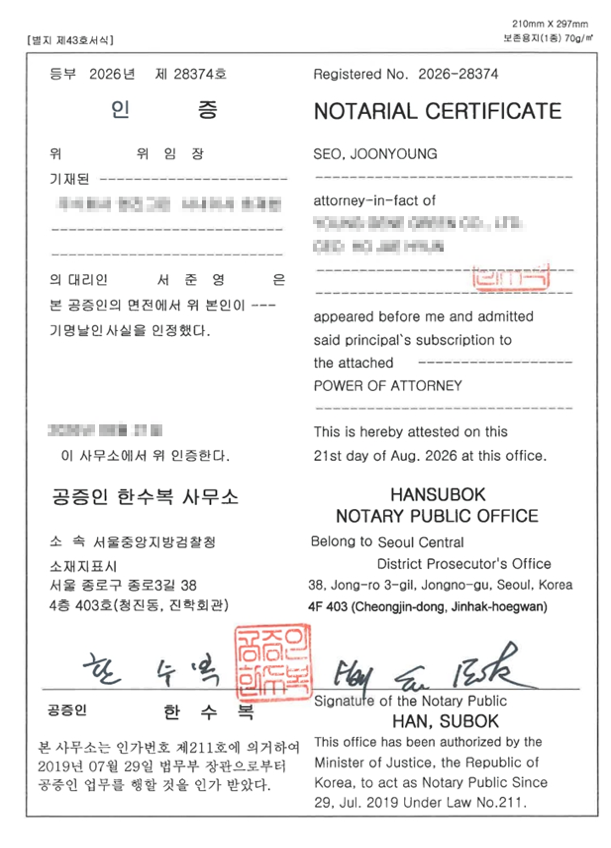
Notarization of facts is a method in which the person states that the information written in the document is true and the notary public confirms the statement.
Often used in corporate documents. For example, this method is often used when notarizing documents written by a company, such as a confirmation, declaration, or power of attorney to be submitted overseas. This is a structure in which the company representative or person in charge reveals that the information is true and has it notarized.
In export documents, it is common for a free sale certificate or power of attorney to be notarized. This is because it is not an official document issued domestically, but a document created by the company.
Standards for determining which one to receive
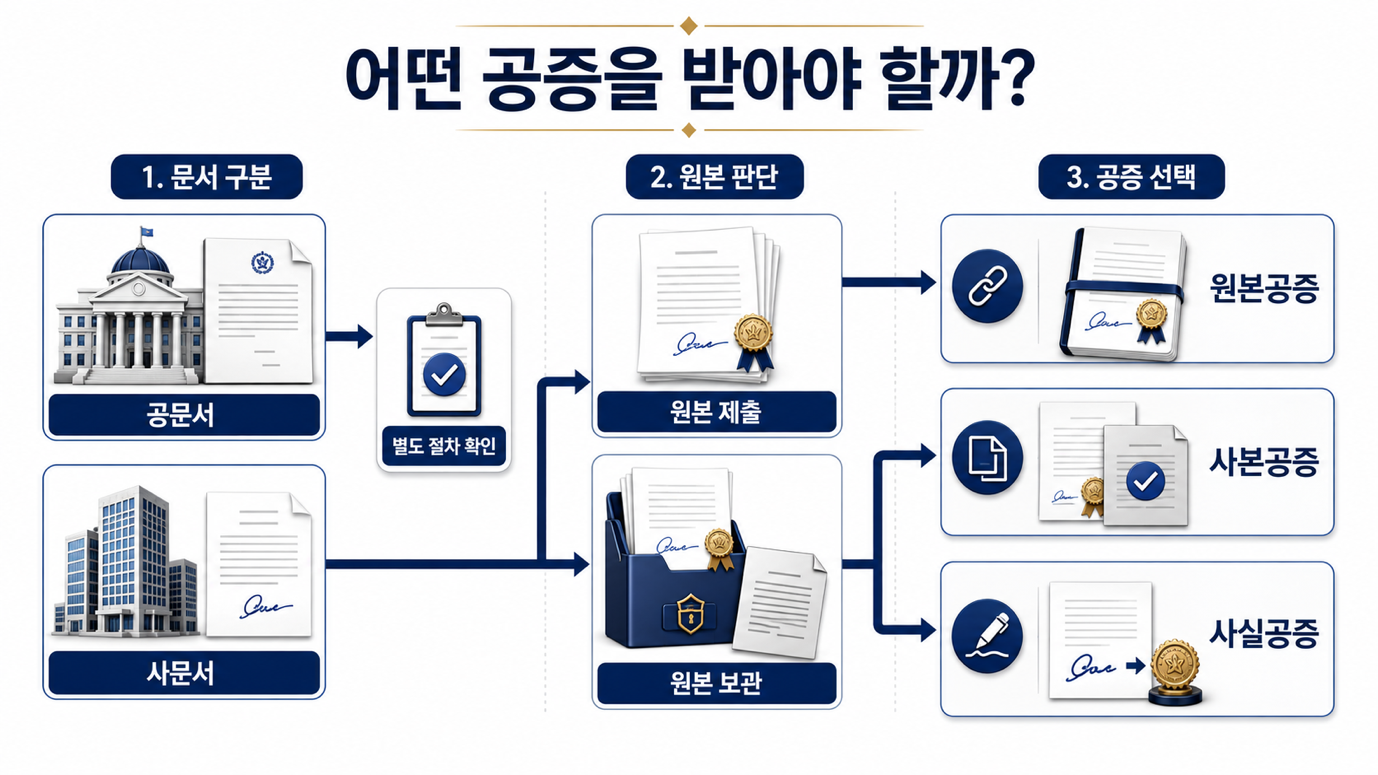
There are two ways to decide which of the three you will receive.
First, the nature of the document. If it is an official document issued by a government agency, you can usually receive an Apostille right away without notarization. On the other hand, if it is a private document written by a company or individual, notarization is required, and in this case, it is either original notarization or factual notarization.
Here's what to do with the original. If you can submit the original and there is no need to retrieve it, notarizing the original is natural. If the original must be kept or if the original cannot be submitted, a copy of the document must be notarized.
The most certain way is to check with the submission source. In many cases, you will specify which method of notarization you want the documents received. If you decide arbitrarily when the requirements are unclear, there is a risk of rejection.
Costs vary depending on the notarization method

The three methods have different procedures and therefore different costs.
Copy notarization is a relatively simple process because it compares the original and the copy. Original notarization and factual notarization involve the process of verifying the contents of the document and the author, and in the case of corporate documents, verification of the corporation may be added. It is also common that the larger the number of documents, the higher the cost.
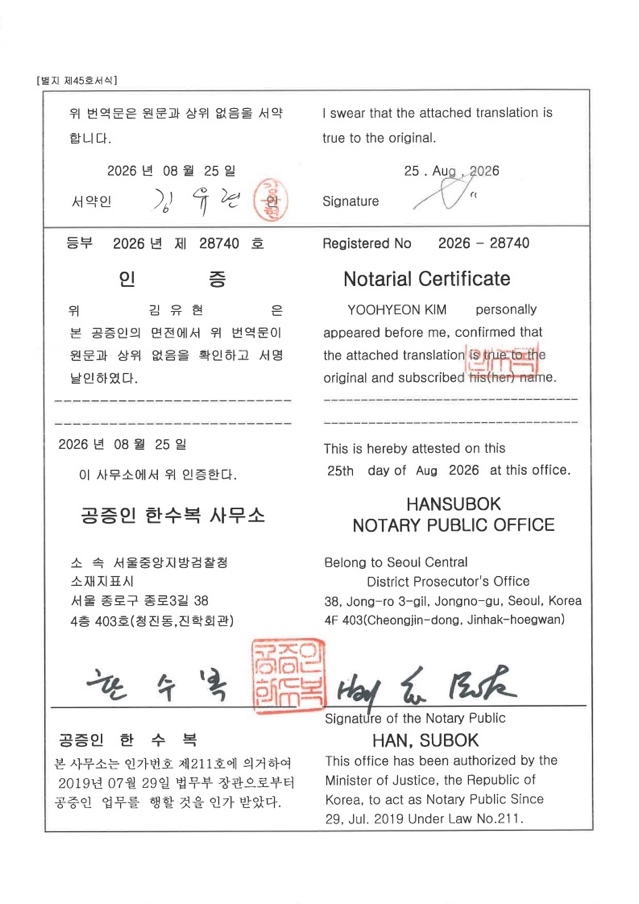
If a translation is added here, the translation cost will be added. Since the cases of notarizing a translation are different from those of notarizing the original, it is easier to predict the cost if you organize in advance what combination you will use for documents that require translation.
Frequently Asked Questions
Q. Can I get the original back if I notarize it?
Original notarization involves attaching a notarization certificate to the original to form a single document, making it difficult to retrieve the original separately. If you need to keep the original, it is best to check with the submission office to see if a copy can be notarized.
Q. What kind of notarization is required for my passport?
Since the original passport cannot be submitted, it is common to proceed with a notarized copy. This is a method of comparing the copy with the original to confirm that it is the same.
Q. What kind of notarization is a power of attorney?
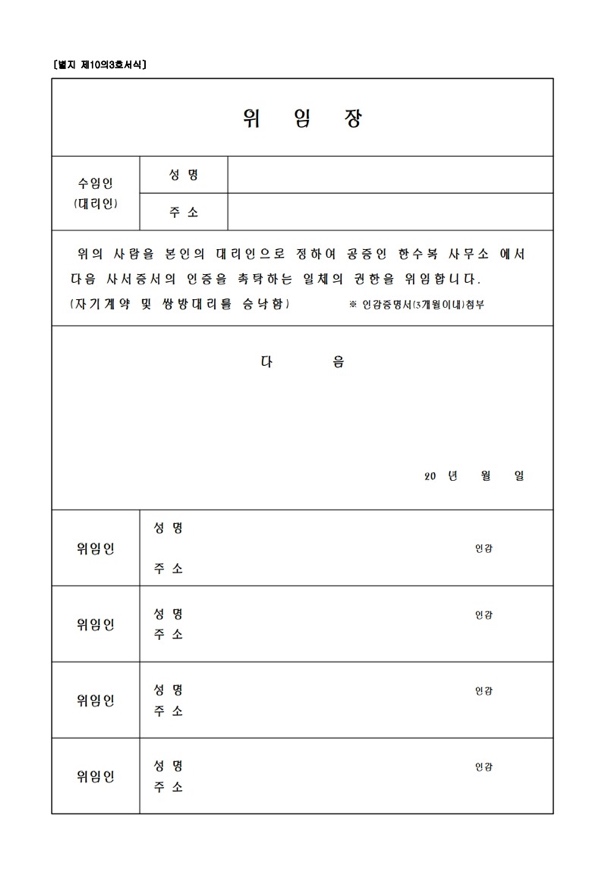
Since the power of attorney is a private document prepared by a company or individual, it must be notarized by notarizing the original or notarizing the fact. The method varies depending on the submission destination requirements and document type, so confirmation is required.
Q. Can’t I get an Apostille right away without getting it notarized?
In many cases, official documents issued by government agencies can receive an Apostille immediately without notarization. However, documents written by companies or individuals must first be notarized before they can proceed to the authentication stage.
Q. What should I do if the submission destination does not specify a notarization method?
The decision is made based on the nature of the document and whether the original has been recovered. If you have difficulty deciding, please let us know the type of document and its purpose and we will guide you through the general process.
Conclusion
Original notarization, copy notarization, and factual notarization each have different verification targets. The difference is whether you are notarizing the original document itself, verifying that the copy is the same as the original, or verifying the statement that the contents are true. Which one you will receive will depend on the nature of the document, whether the original has been recovered, and the submission requirements.
Nanum Global will look at the documents and organize which notarization method is correct and which combination should be used in case of translation. It goes from notarization to apostille and consular authentication, so there is no need to go through each step again. If you are having trouble deciding what kind of notarization to get, please let us know the type of document, country of submission, and purpose.
Are you worried about which notarization to get?
If you tell us the type of document, country of submission, and purpose, we will guide you through the appropriate method of original, copy, or notarization and the subsequent authentication process.


