

Key Summary
- Private documentSince the power of attorney is a private document written directly by the company, it cannot receive an Apostille right away and must first be notarized.
- UtilizationThis is frequently required in all overseas transactions, including delegation of sales authority, establishment of a local corporation, and appointment of a branch manager.
- Procedure/UpdateIf the country of submission is a member country, it is notarized and then apostilled. If the country is not a member country, it is notarized and then consular authentication and embassy authentication are received. In particular, management of the renewal cycle is important.
There are frequently asked questions. “An overseas business partner asks us to get an Apostille on the power of attorney. Can’t we just write the power of attorney?”
Since the power of attorney is a document prepared directly by the company, it is easy to think that all you have to do is fill it out. However, in overseas transactions, it must be possible to verify locally whether the power of attorney is really an official document written by the company, and the confirmation procedures include notarization and apostille. A power of attorney is a document that requires certification as often as a contract in import/export transactions.
In this article, we will summarize why authentication is required for a power of attorney, under what circumstances it is required, and the processing procedures and precautions unique to a power of attorney. This will be helpful if you are a company that needs to handle power of attorney for overseas transactions.
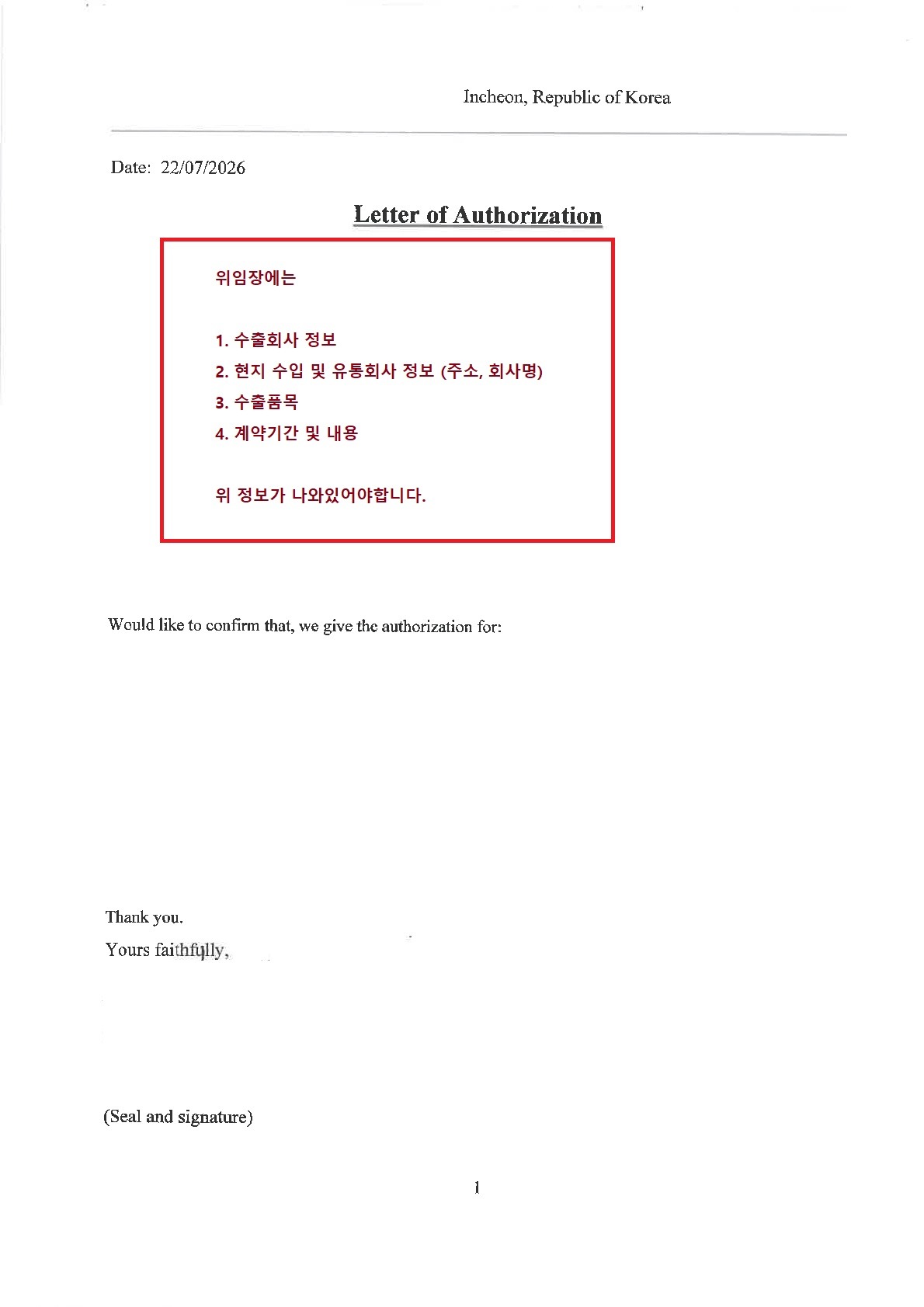
A power of attorney is a private document, so notarization comes first.
There is the first thing you need to understand when processing a power of attorney. A power of attorney is a private document written by the company itself.
I previously explained the difference between official and private documents in another article, but a power of attorney is a typical private document. Because it is a document created by a company, not a document issued by a government agency, you cannot receive an Apostille right away. It must be notarized first.
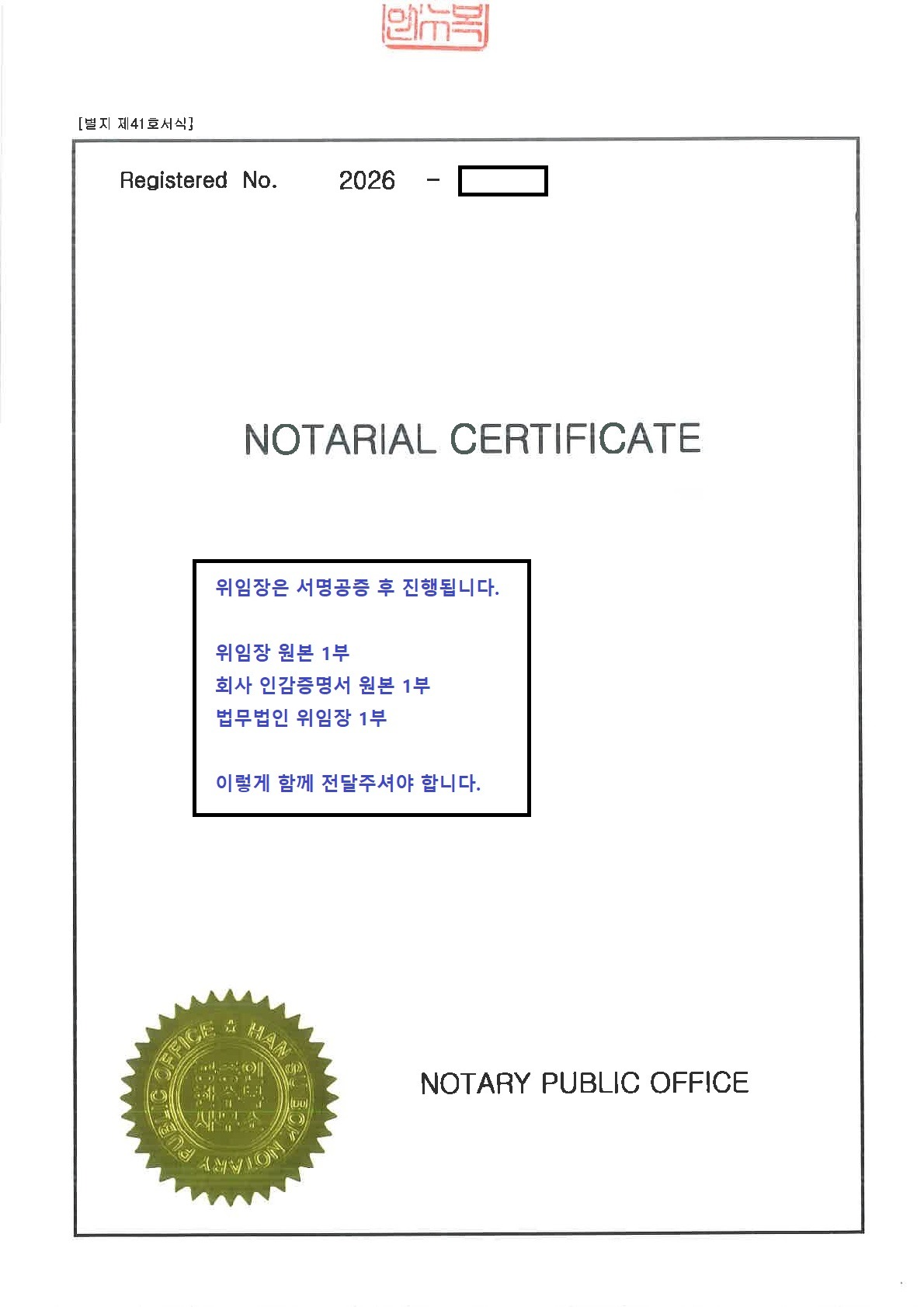
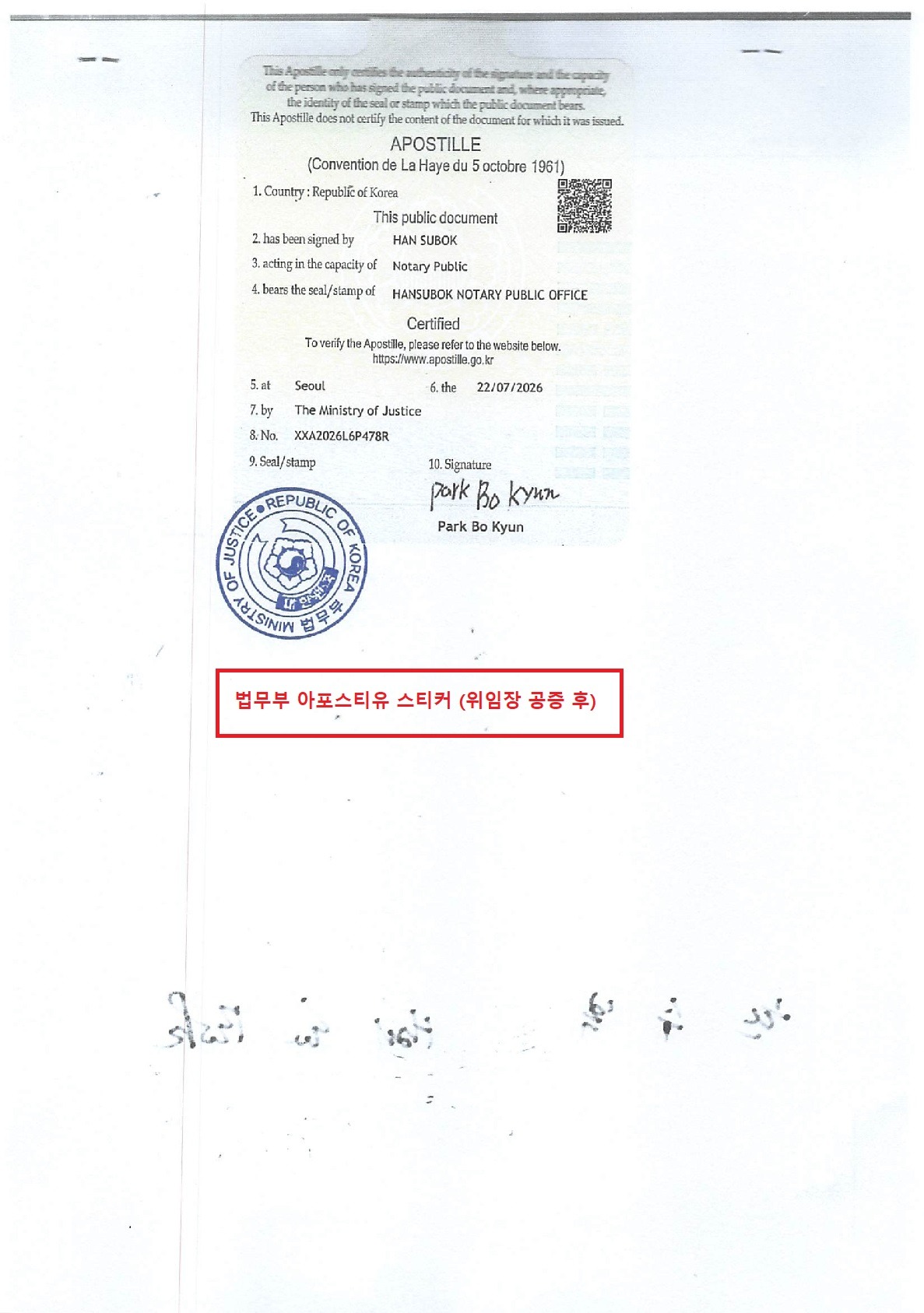
Notarization is the step where the notary public confirms that this power of attorney has been prepared in due process. Only after receiving notarization can you proceed to Apostille from the Ministry of Foreign Affairs or confirmation from the consulate. So, a power of attorney has one more step in the process than an official document, and there is more to prepare.
Typical situations where a power of attorney is required
The situations in which a power of attorney is needed for overseas transactions are more diverse than you might think. Let's look at some representative cases.
The most common is delegation of sales authority. This means that a Korean company delegates the authority to sell a specific product to a local importer or seller. This serves as the basis for confirming whether the company is qualified to officially sell our products locally. It is often required for export of cosmetics, medical devices, and various consumer goods.
Next, a power of attorney is required during the process of establishing a local corporation or opening a branch. When establishing a local company or appointing or changing a branch manager, documentation is required showing that the headquarters delegates relevant authority to a specific person. This power of attorney must be certified before the local registration process can proceed.
In addition, when entrusting a specific task locally to an agent, a certified power of attorney must be submitted to prove the authority.
Depending on the country of submission, is it Apostille or consular authentication?
Like other documents, the procedures for a power of attorney differ depending on whether the submitting country is a signatory to the convention.
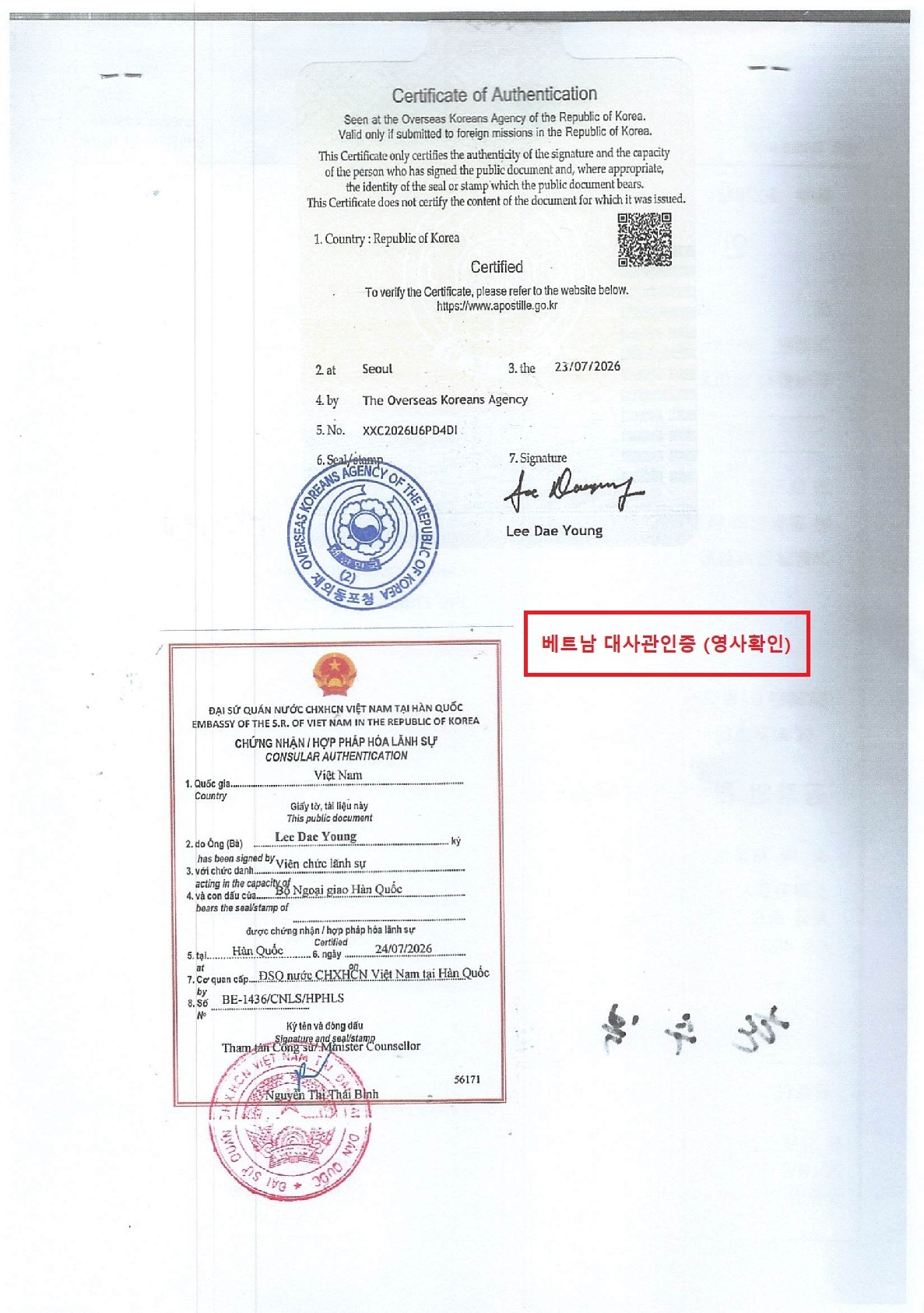
If the submitting country is a signatory to the Apostille Convention, the Apostille will be received after notarization. This includes the United States, China, Russia, and most European countries. If the country is not a member, it must be notarized, confirmed by the consulate, and even certified by the embassy of that country. This includes some countries in the Middle East, such as the UAE.
Therefore, before processing a power of attorney, you must first check which country it is being submitted to in order to accurately follow the procedure.
Points to note unique to power of attorney, renewal cycle
An area that requires special attention in power of attorney is the renewal cycle. This part stands out from other documents.
A power of attorney to sell often must be reissued and certified at certain intervals in accordance with local law. For example, some countries require powers of attorney to be renewed every few years. Just verifying and submitting it once is not the end. When renewal time comes, you must notarize, authenticate, and submit the new power of attorney again to maintain local transactions.
If you miss the renewal deadline, your local selling authority may expire and your transactions may be disrupted. Therefore, if you are a company that continues to deal with clients, it is important to manage the renewal time for each power of attorney.
Frequently Asked Questions
Q. Can’t I just fill out the power of attorney and send it?
In overseas transactions, it must be possible to verify locally whether the power of attorney is an official document. Since the power of attorney is a private document, it must first be notarized and then receive an Apostille or consular authentication to be recognized locally. Usually, a power of attorney written in the language requested by the submitting country will be notarized and Apostilleed (confirmed by the consulate).
Q. Why do I need to get the power of attorney notarized first?
This is because the power of attorney is a private document written by the company itself. Unlike official documents, you cannot receive an Apostille right away, and you must first go through the notarization stage where a notary public confirms the legitimacy of the writing.
Q. In what situations is a power of attorney required?
This is mainly required when delegating sales authority to a local importer or seller, establishing a local corporation, appointing or changing a branch manager, or entrusting work to a local agent. It is often used throughout import/export and overseas expansion.
Q. Once the power of attorney is verified, can I continue to use it?
A power of attorney to sell often must be renewed at regular intervals in accordance with local law. If you miss the renewal time, your local authority may expire, so it is recommended to manage the renewal time for each power of attorney.
Q. Are the procedures different depending on the country of submission?
Yes. If you are a country that has signed up to the convention, you will receive an Apostille after notarization. If you are a country that has not joined the convention, you will receive notarization and then consulate and embassy authentication. You must first check the country you are submitting to in order to accurately follow the procedure.
Conclusion
A power of attorney is a document prepared directly by the company, but in order to be recognized in overseas transactions, it must go through notarization and Apostille or consular authentication. Since it is a private document, notarization is required first, and the procedures vary depending on the country of submission, and management of the renewal cycle is especially important.
Nanum Global handles everything from reviewing the power of attorney to notarization, apostille, and consular authentication in accordance with the requirements of the country of submission. We will guide you through what notarization is required, what certification is appropriate for the country of submission, and when renewal is due. If you have any concerns about power of attorney certification, please let us know the country to which it is being submitted and the details of the power of attorney. We will reply with a summary of the necessary procedures. If you are a company that repeatedly processes power of attorney, we can also provide you with renewal management.
Apostille and consular authentication of power of attorney, leave it to Nanum Global
If you let us know the country to which you are submitting and the details of your delegation, we will guide you through the necessary notarization and certification procedures.


