

Key Summary
- StandardOverseas registration of medical devices requires Apostille or consular authentication such as CFS, manufacturing certificate, and sales authorization letter.
- ProcedureIssuing documents alone is not enough, and Apostille and embassy authentication are different depending on whether the submitting country is a signatory to the convention.
- ManagementSince the required documents and renewal cycle are different for each country, registration maintenance must be managed together.
There are frequently asked questions. “I am trying to export a medical device overseas, but they ask me to get an Apostille on the registration document. What documents do I prepare and how do I prepare them?”
Medical devices have difficult local registration procedures. Because it is directly related to human health, the importing country verifies with various documents whether the product is normally manufactured and sold in Korea, its country of origin. And for those documents to be recognized locally, they must receive Apostille or consular authentication.
In this article, we will summarize what the main certification documents required for medical device export are, how to certify them, and what to watch out for when processing them. This will be helpful for companies looking to export medical devices or related devices.
Documents required for local registration of medical devices
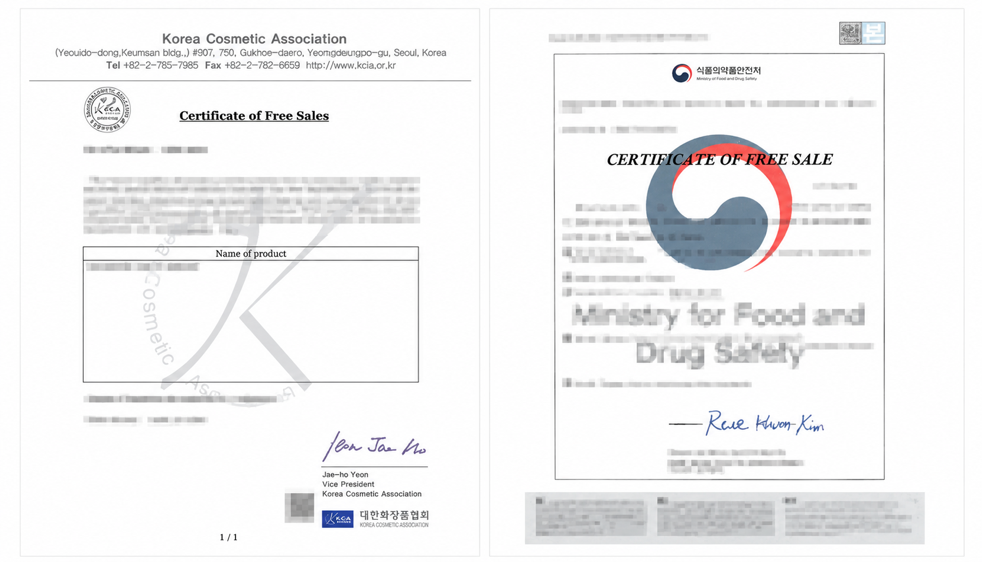
Several documents are required to register a medical device overseas. Let’s look at a representative example.
The certificate of free sale, or CFS, is a document confirming that this product is a legitimate product freely sold in Korea. It is a key requirement for medical device registration. The manufacturing certification documents prove that this product is officially manufactured in Korea. A delegation of sales authority means that a Korean company delegates sales authority to a local importer or seller, and serves as the basis for confirming whether that company is qualified to sell our products locally.
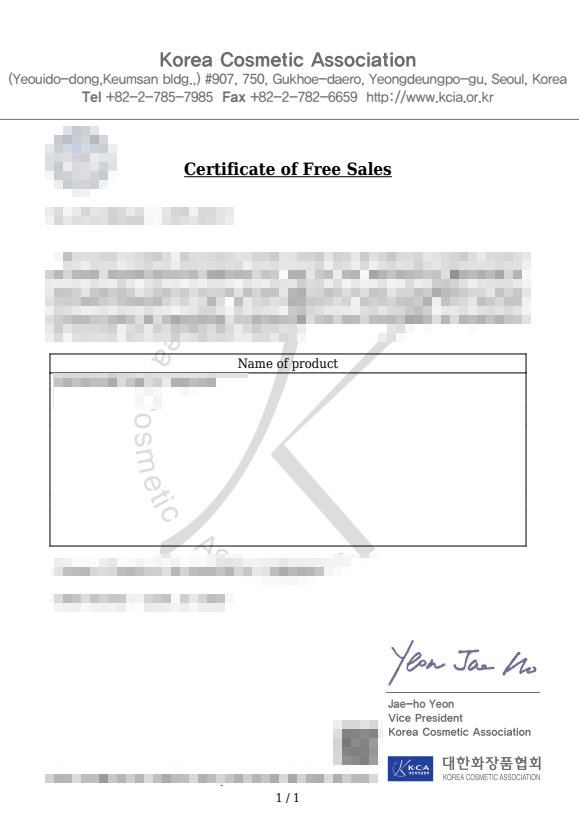
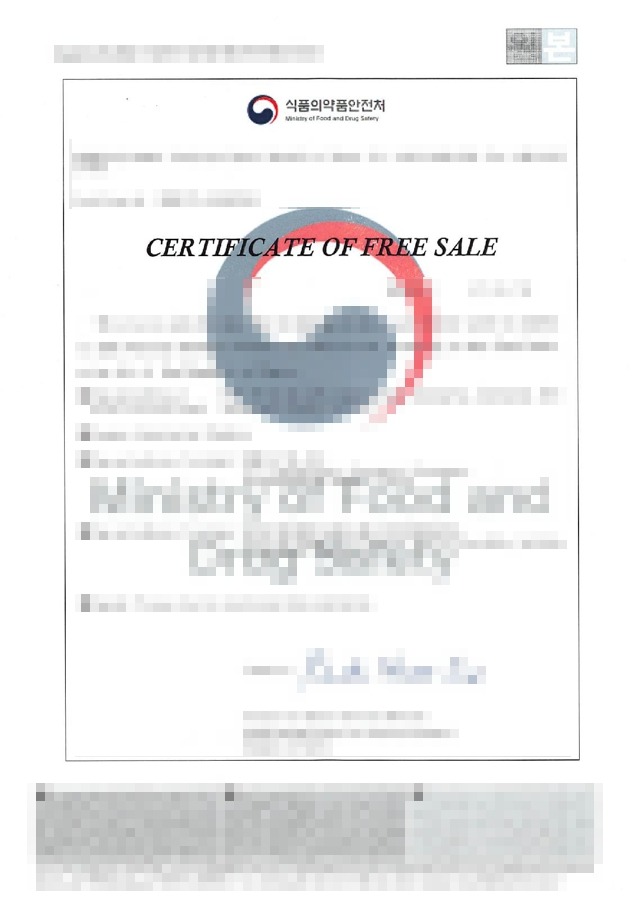
In addition, additional documents may be required depending on the nature of the product and the regulations of the country of submission. Since medical devices have strict registration regulations in each country, it is important to first secure a list of required documents once the export destination country is decided.

Issuing documents alone is not enough
Here is a point that many companies miss. Just because you have received or completed a CFS, manufacturing certificate, or power of attorney does not mean you can submit it to the local site right away.
The local agency must be able to confirm that the document is truly an official document issued in Korea, and the confirmation process is Apostille or consular authentication. Documents that have not been certified will not be accepted by the local registrar. It is important to remember that issuing documents and getting them certified are separate steps.
Depending on the country of submission, is it Apostille or consular authentication?
The procedures for medical device documents also differ depending on whether the submission country is a signatory to the convention.
If the submitting country is a signatory to the Apostille Convention, an Apostille will be received. This includes the United States, China, Russia, India, and most European countries. If your country is not a member, you will receive consular authentication and then certification from the embassy of that country. This includes some countries in the Middle East, such as the UAE.
Medical devices are often exported and registered to multiple countries at the same time, and management becomes complicated when certification methods are different for each country. The process will be easier if you keep track of which countries require Apostille and which countries require embassy authentication.
Requirements and renewal cycles vary by country
What you need to pay special attention to when exporting medical devices is that the requirements and renewal cycles are different for each country.
Some countries only require a CFS and a power of attorney, while others require additional documents. Additionally, documents such as a sales power of attorney may need to be renewed at certain intervals according to local law. Registration does not end once, but when it is time for renewal, documents must be re-certified and submitted to maintain local sales.
For medical devices, maintenance of registration is directly related to sales, so it is important to manage country-specific requirements and renewal cycles. Missing a renewal may result in your local registration expiring and stopping you from selling it.
Get translation certification too
If medical device documentation needs to be translated into the language of the submission country, translation certification must be obtained. When submitting a translation, authentication is often required for both the original and the notarized translation. There are cases where only the translated copy is certified and then rejected due to failure to verify the authenticity of the original locally, so it is recommended to check the submission requirements in advance. Medical devices have a lot of technical terminology, so translation accuracy is important.
Frequently Asked Questions
Q. What documents are required to export medical devices?
Certificate of free sale (CFS), documents related to manufacturing certificate, and power of attorney for sales authority are mainly required. Additional documentation may be required depending on the product and country, so it is recommended to check the registration regulations of the country you are exporting to.
Q. Can I submit the CFS immediately after it is issued?
No. After receiving a CFS, you must obtain an Apostille or consular authentication to be recognized locally. If the submission country is a signatory to the convention, it will receive an Apostille, and if it is not a signatory country, it will receive consular authentication and embassy authentication.
Q. Are the procedures different in each country?
Yes. For countries that have signed up to the convention, it is an Apostille, and for countries that have not joined the convention, it is consulate confirmation and embassy authentication. When registering in multiple countries, the process will be easier if you organize the authentication methods for each country.
Q. Once registered, can I continue to sell it?
Varies by country. Documents such as a sales power of attorney may need to be renewed at certain intervals. If you miss a renewal, your registration may expire, so it is a good idea to manage your renewal cycle by country.
Q. How do I certify the translation of medical device documents?
When submitting a translation, authentication is often required for both the original and the translated notarized document. Medical devices have a lot of technical terminology, so translation accuracy is important, so it is best to check the submission requirements and translate accurately.
Conclusion
The key to exporting medical devices is to certify the documents required for local registration, such as CFS, manufacturing certificate, and power of attorney, through Apostille or consular authentication. Issuing documents alone is not enough, procedures vary depending on the country of submission, and country-specific requirements and renewal cycles must be taken into account to ensure continued local sales.
Nanum Global handles everything from translation of CFS, manufacturing certificate, power of attorney, etc. required for medical device export to notarization, Apostille, and consular authentication in accordance with the requirements of the country of submission. We will guide you through what documents are required, how to certify them, and when renewal is due. If you are concerned about medical device export documents, please let us know the export destination country and product type. We will guide you through the required documents and certification procedures. If you are a company that exports repeatedly to multiple countries, we can accommodate country-specific requirements and renewal management.
Medical device export certificate, leave it to Nanum Global
If you tell us the export destination country and product type, we will guide you through the Apostille and consular verification procedures required for CFS, manufacturing certification, and power of attorney.


