
Key Summary
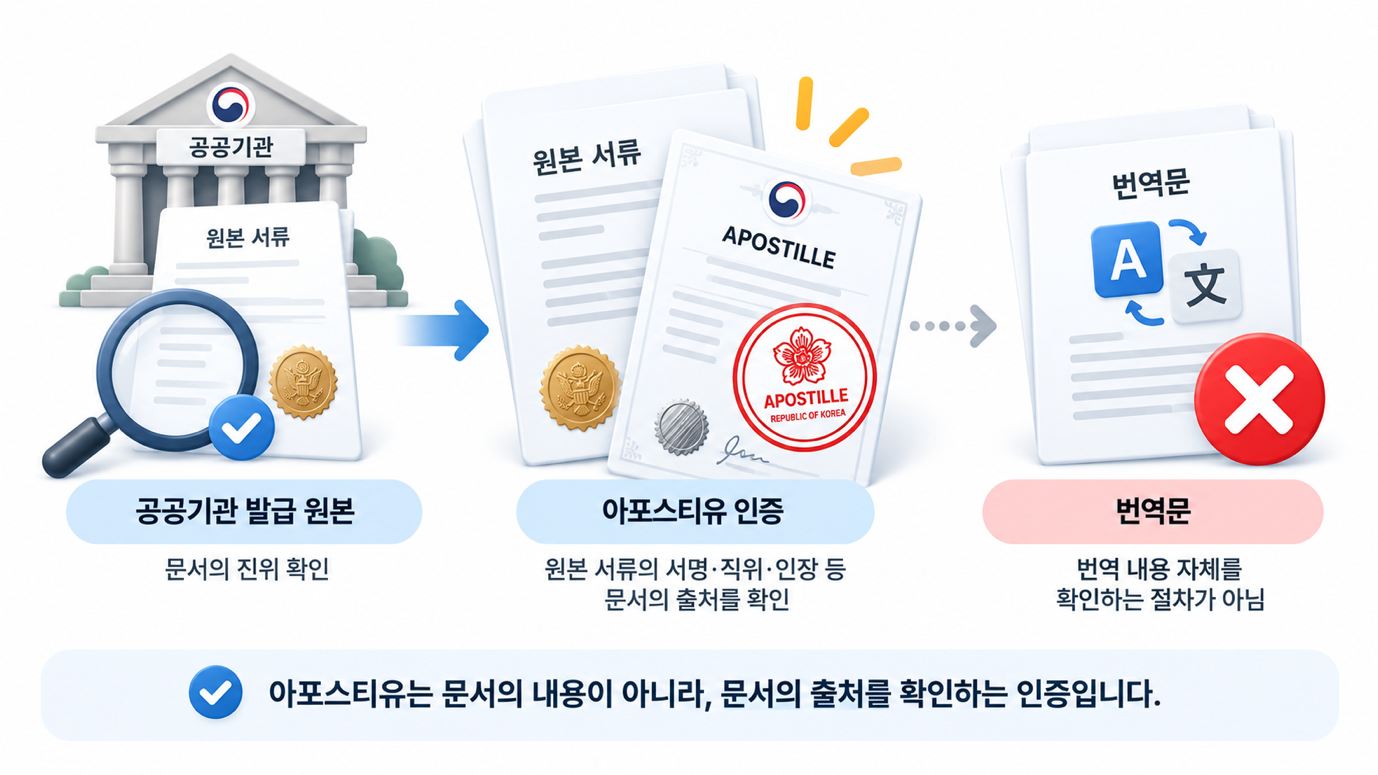
- PrincipleApostille and consular verification are procedures that confirm the authenticity of the original document.
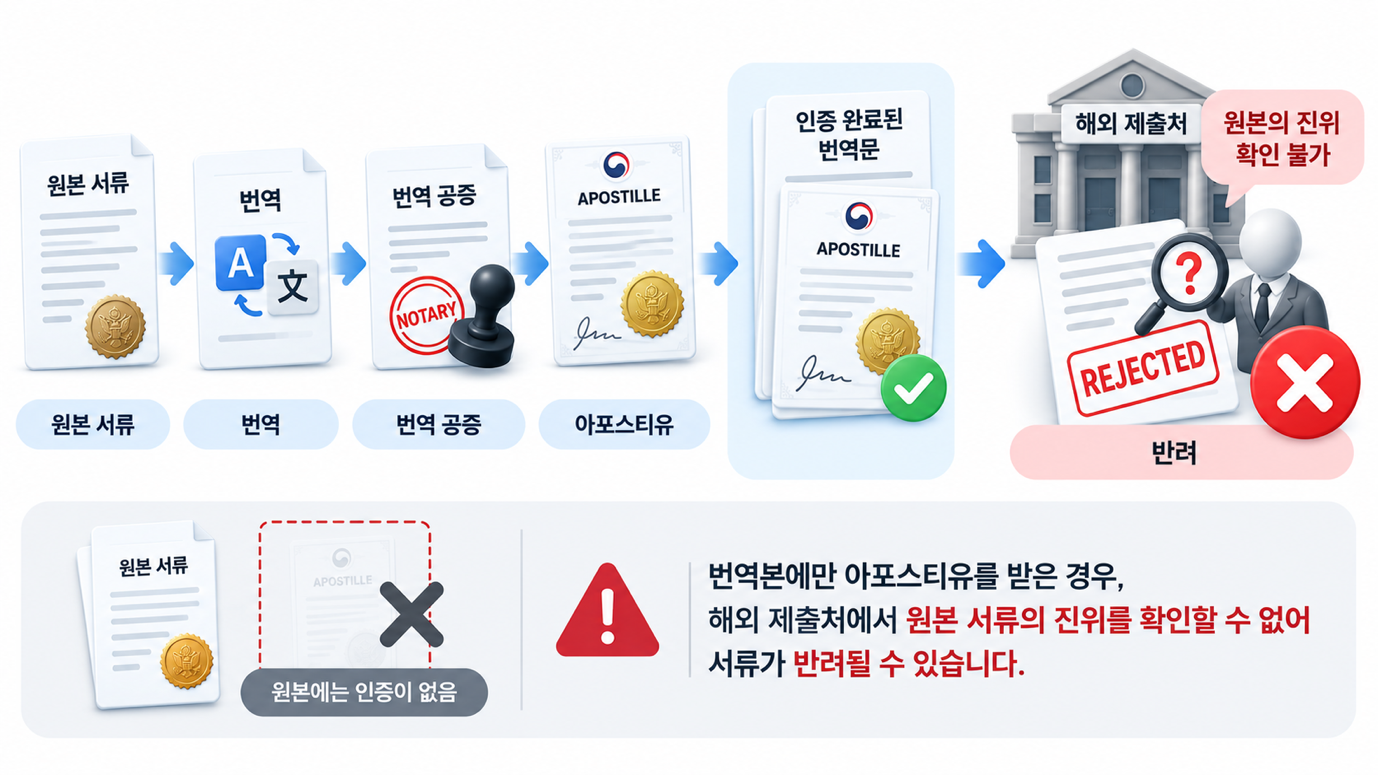
- ProblemIf you only authenticate the translated notarized document, it is often rejected because the authenticity of the original cannot be confirmed locally.
- SolvedFirst check with the submission source whether authentication is required for each original and translated notarized document.
- ExceptionIf it is possible to issue the original in English, there is also a way to authenticate only the original without translation.
There are frequently asked questions. “I got the translation notarized and an Apostille on top of it, so why are they saying I can’t do it?”
There is a reason this question is asked so many times. Because it feels strange in terms of procedure. The translation has been notarized and an Apostille has been attached to the document, so it appears to be complete, but it is not accepted locally.
In this article, we will explain why this happens and what to do. If you plan to translate documents and submit them overseas, it is good to know this in advance.
Subject confirmed by Apostille
The key is in the process of confirming what Apostille is.
Apostille confirms that the document is truly a document issued or notarized by a public institution in Korea. In other words, the subject of verification is the authenticity of the document itself. We do not guarantee that the contents of the document are true or that the translation is accurate.
However, if you receive an Apostille only on a translated notarized document, the authentication only confirms that “this translated notarized document is really a document notarized by a Korean notary office.” It does not confirm which original the translation is from or whether the original was actually published by a Korean institution.
The local receiving agency cannot verify the authenticity of the original. That's why I don't accept it.
So the original also needs authentication
A workaround for this issue is to have the original authenticated as well.
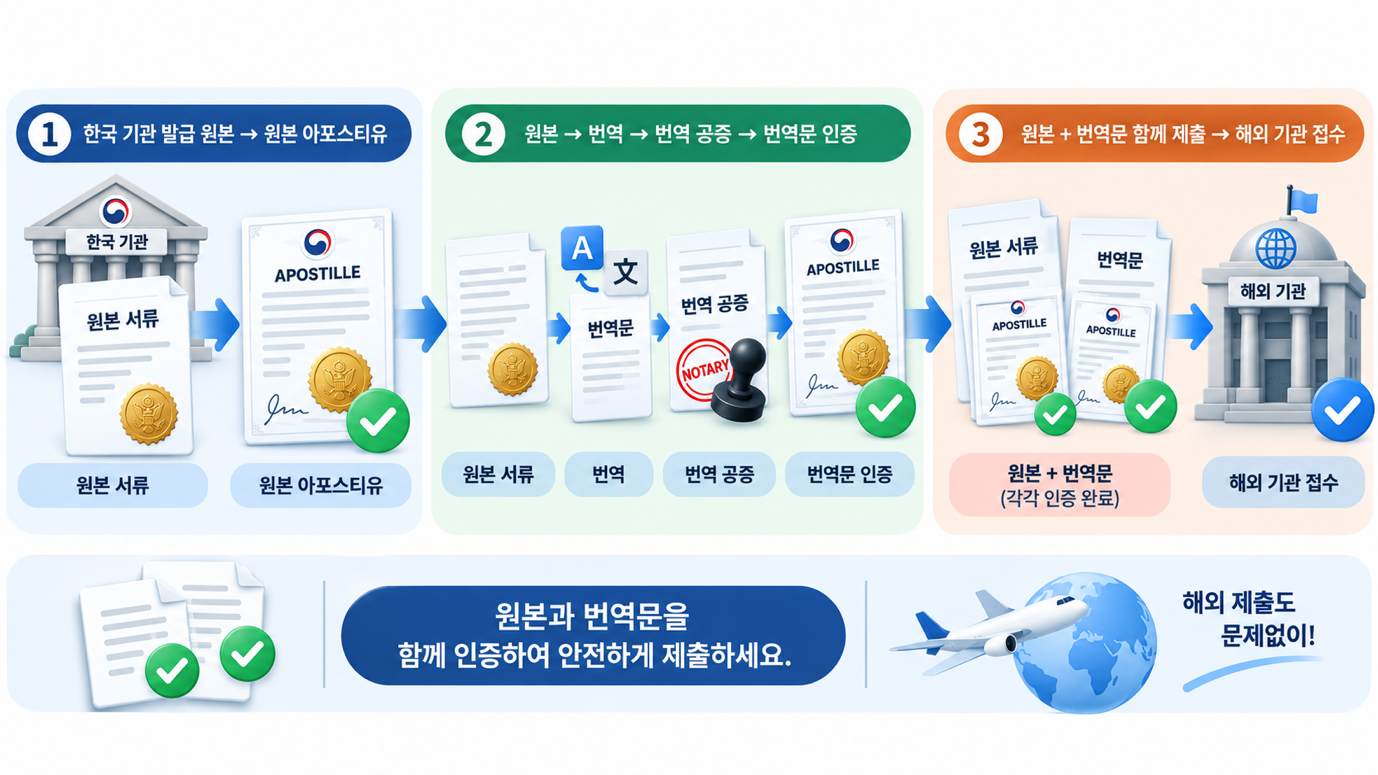
Receiving an Apostille on the original document confirms that the document was truly issued by a Korean institution. If the translation notarized document is also certified, the translation process is also publicly confirmed. Submitting both documents together allows local authorities to verify both the authenticity of the original and the official nature of the translation.
Therefore, when submitting a translation, authentication is often required for both the original and the translated notarized document. This is not intended to complicate the process, but is a structure to have documents recognized locally.
Particularly emphasized in Chinese submission documents
This principle is particularly clearly emphasized in the guidance regarding China.
In China, the Apostille Convention will come into effect from November 2023, and apostille will be processed without embassy authentication. Although the process has been streamlined, the requirements for translation certification remain. If you only receive an Apostille on a notarized document with a translation attached, it is highly likely that the Chinese receiving agency will not accept the authenticity of the document.
It is easy to think that this part has been simplified just because the procedures have been reduced, but this is where the problem arises. As the embassy step is eliminated, the accuracy of the previous step has become more important.
Do I always need to be certified in two cases?
Not really. Depends on submission requirements.
Some submissions require documents to be certified in both the original and the translation, while others certify only the original and accept the translation separately. If a document can be issued in English, there is also a way to obtain the original English document and authenticate only there. Documents issued in English, such as family relationship certificates, fall into this category.
So, I am not saying that you must certify two cases, but rather check what combination you need before starting. If you authenticate two cases when it is not necessary, the cost will increase, and if you authenticate only one case when it is necessary, it will be rejected.
Three things to check
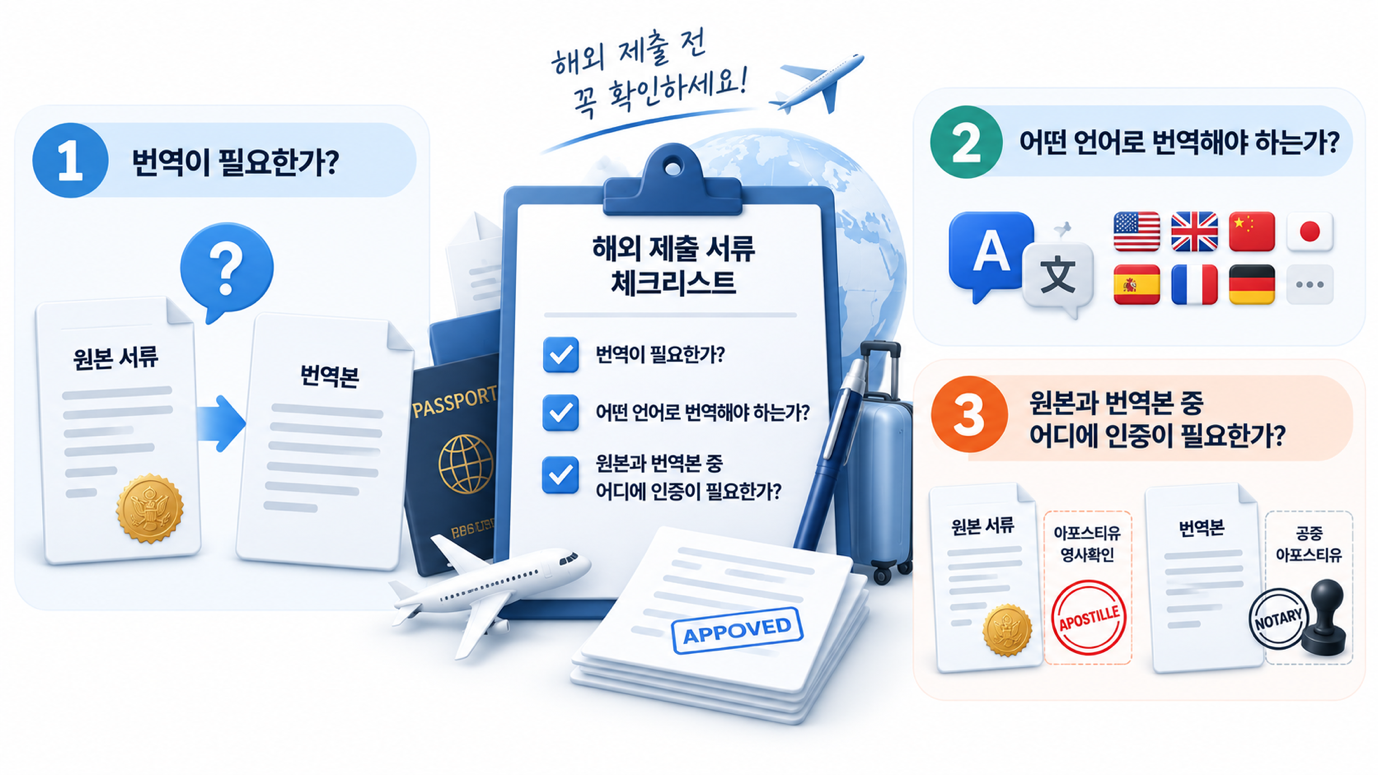
When preparing documents for translation, there are three things to ask the submission site about.
- Is translation required? If the document can be issued in the original English, translation itself may not be necessary.
- It depends on what language it should be translated into — English or the local language of the submitting country.
- Whether authentication is required: the original or the translated version.
Just checking these three things can prevent most translation-related rejections.
Frequently Asked Questions
Q. I have had the translation notarized, but why does the original also need certification?
Apostille is a procedure to confirm the authenticity of the original document. If you only authenticate the translated and notarized document, it is often not accepted locally because it is impossible to verify whether the original is authentic.
Q. If I certify both the original and the translation, does the cost double?
Costs increase as there are two authentication targets. However, it costs less than having it rejected and starting over from scratch. Just check the submission requirements and proceed with only the combination you need.
Q. Do documents issued in English require translation?
If it is possible to issue an English original and the submission destination accepts English, you only need to certify the original without translation. There are documents that are issued in English, such as a family relationship certificate.
Q. China has been simplified with Apostille, but has translation also become simpler?
No. Although the embassy certification step has been eliminated, the translation certification requirements remain the same. In many cases, an Apostille is required for both the original and translated notarized documents, so please check.
Q. What should I do if the submission site does not inform me of the requirements?
If verification is difficult, the risk of rejection is lower if you authenticate both the original and the translation. However, as the cost increases, it is recommended that you first check the type generally required in your country and application.
Conclusion
The reason it is rejected if only the translation is authenticated is because Apostille is a procedure to confirm the authenticity of the original. If you only authenticate the translated notarized document, there is no way to verify the original locally. Therefore, when submitting a translation, authentication is often required for both the original and the notarized translation.
Nanum Global will first check what combination of translation and authentication should be used when submitting documents. If the document can be reduced to translation by issuing the original English version, we will advise you accordingly. If you are concerned about documents requiring translation, please let us know the document type, submission country, and submission destination requirements. We will reply with a summary of the necessary combinations and procedures.
Are you curious about the translation document certification combination?
If you tell us the type of document, the country of submission, and the requirements for the submission destination, we will guide you through which document or translated version requires certification.


