
Key Summary
- StepTranslation only / Translation administrator certification / Notary office translation notarization — each procedure and cost are different.
- DecisionThe submission site determines which steps are necessary.
- FactorThe final cost is determined by adding the translation volume, language, and original certification.
- SavingsIf it is possible to issue the original English document, translation and translation notarization costs can be reduced.
There are frequently asked questions. “Can I just translate it or do I need to get it certified? Is there a big cost difference?”
There is a difference. And if you proceed without knowing the difference, you may end up spending more money by taking unnecessary steps, or, conversely, proceed with insufficient steps and then get rejected.
In this article, we will explain how the translation-related steps are divided and how the costs vary at each step. You can use this as a standard when comparing quotes.
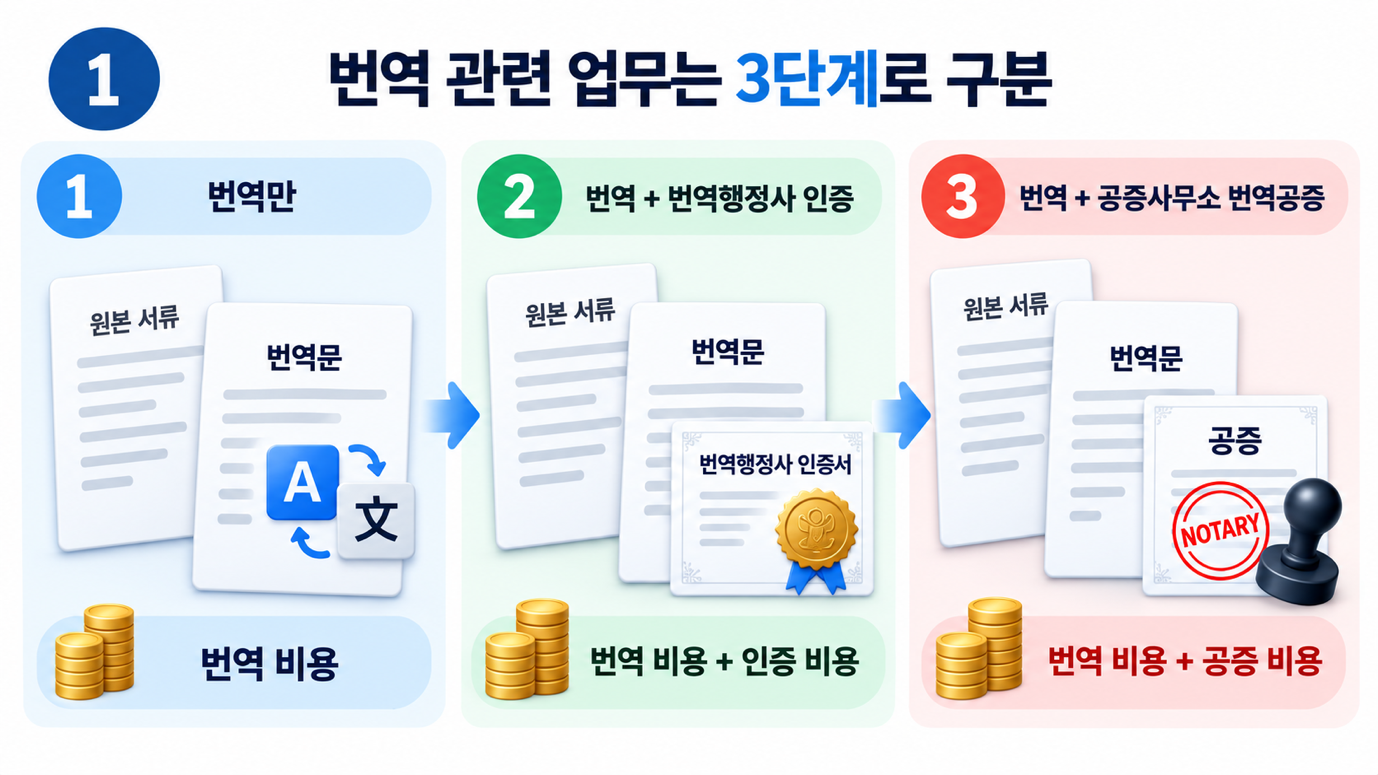
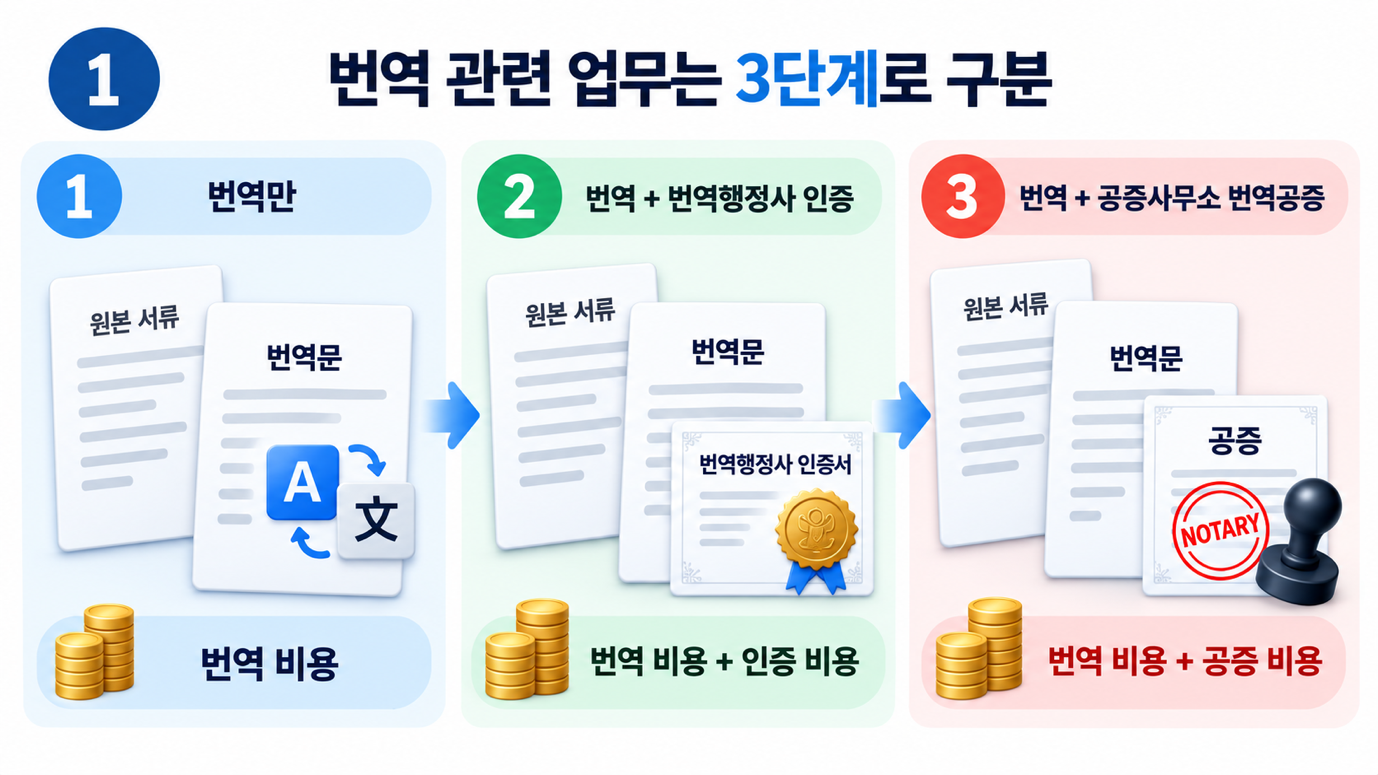
The steps involved in translation are divided into three branches:
To talk about costs, you must first distinguish the stages.
The simplest case is just translation. This only involves translating a document into another language, and is used for reference purposes or when the submission site does not require separate authentication. Only translation costs apply.
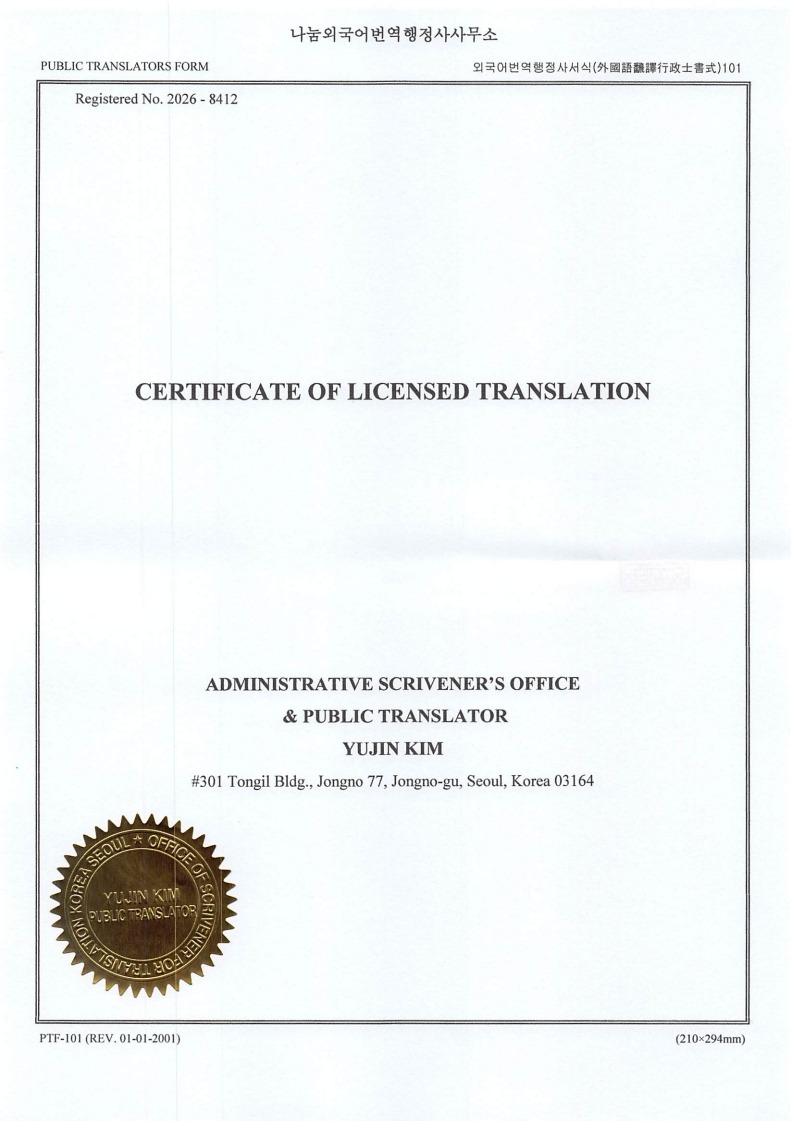
The following is a case where translation administrator certification is applied. This is a method in which a translator with administrative license certifies the accuracy of the translation, and is often called a certified translation. There are countries and organizations that allow submission with only this, such as the United States and Canada. Certification costs are added to the translation cost.
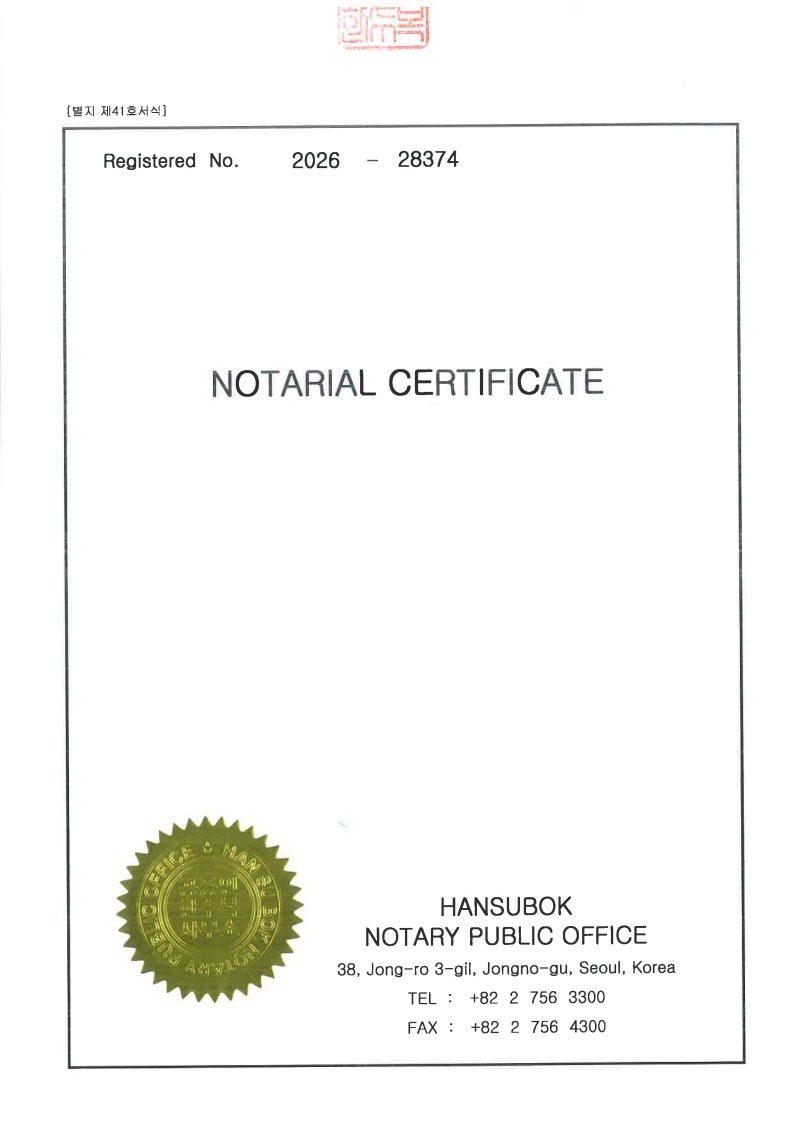
The last step is to get the translation notarized at a notary office. A notary public notarizes the translation, allowing you to proceed to the Apostille or consular authentication stage. Documents submitted to overseas government offices generally require up to this point. Notarization fees are added to the translation cost.
Submitter determines which steps are required
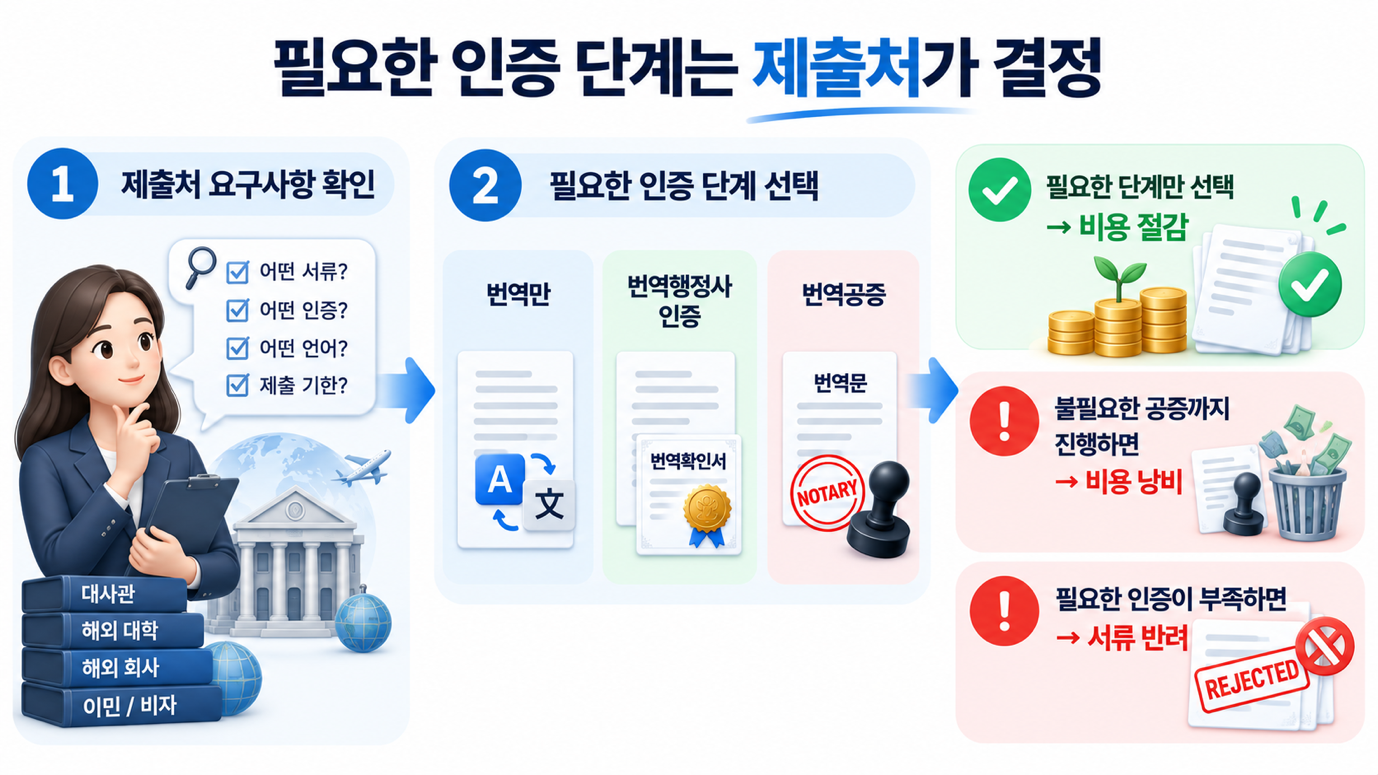
This is important. It is not up to us to choose which of the three steps is necessary, it is up to the submission party.
If the submission party only requests translation, you only need to translate. If you get it notarized, it's money you don't have to spend. On the other hand, notarization and Apostille are required, but if you send only a certified translation, it will be rejected.
So the surest way to save money is to first check with the submission destination what steps are required. This one check makes a difference in cost.
Factors influencing translation costs
Regardless of which of the three steps you choose, translation costs are common. This cost is determined in two ways.
First, the quantity. Translation costs increase for documents with many pages, such as contracts, judgments, and medical records. Conversely, standardized one-page documents such as family relationship certificates or graduation certificates have relatively low rates.
Next is the language. While English has high demand and is relatively stable, prices for languages with lower demand, such as Russian or Arabic, may increase. This is why I mentioned earlier that the processing costs for documents from Russia or Central Asia are high.
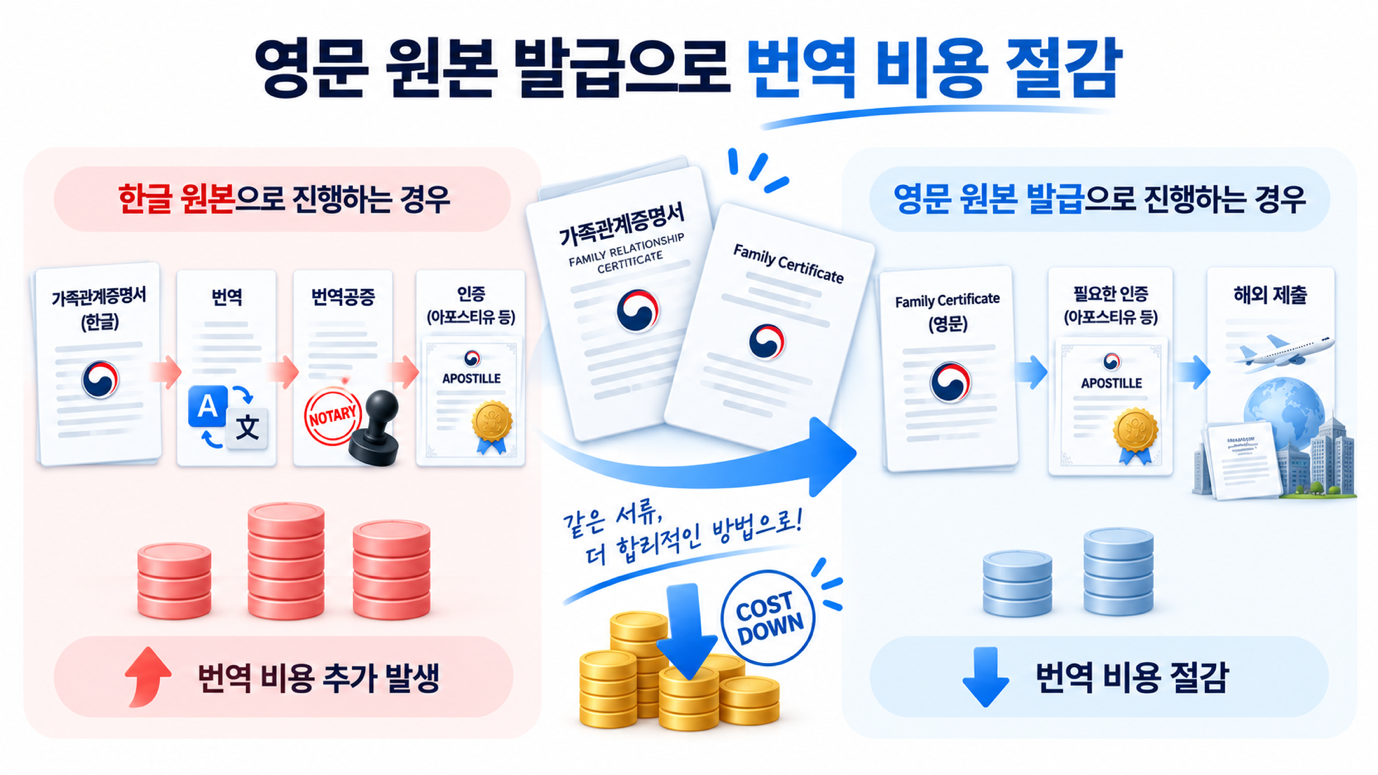
Costs are determined once more by whether translation can be reduced altogether.
There is one more point where the cost of translating documents varies greatly. The question is whether the translation itself can be omitted.
Once the translation is completed, the translation and the original (or a copy of the original) are notarized together and the notarized document is certified. As the amount of translation increases, both translation and notarization costs increase.
Here is a way to reduce costs. If a document can be issued in English, the original will be issued in English. Documents issued in English, such as family relationship certificates or basic certificates, do not require translation, so you can save both translation costs and translation notarization costs. If the submission destination accepts the original English text, this method is the most economical.
What to check when comparing quotes

If you receive quotes from multiple sources for documents that require translation, you must first check whether the conditions are the same so that you can compare.
There are four things to ask.
- Is it just translation or does it include authentication or notarization?
- How was the translation amount calculated?
- Does the amount include original certification?
- Are government office fees and shipping costs included?
If these conditions are different, it is natural that the amount will differ. If the low estimate includes only translation and the high estimate includes notarization and certification, the latter may actually be reasonable.
Frequently Asked Questions
Q. Are there cases where just translation is necessary?
Yes. This is for reference purposes only or if the submission site does not require separate authentication. However, if it is to be submitted to an overseas government office, notarization or authentication is usually required.
Q. What is the difference between translation administrator certification and translation notarization?
Translation administrator certification is when a translator with administrator qualifications certifies the accuracy of the translation, and translation notarization is notarization by a notary public at a notary office. Notarization is often required to proceed with Apostille or consular authentication.
Q. Why are Russian and Arabic more expensive?
Compared to English, the demand is low and the manpower available to handle it is limited, so the unit price may rise. The larger the portion, the bigger the difference.
Q. Is there a way to reduce translation costs?
If the document can be issued in English, there is a way to obtain the original English version. You can save on both translation and translation notarization costs. Please check whether the submission destination accepts the original in English.
Q. Does the cost double if translation is involved?
Since the translation and the original (or a copy of the original) are bundled and certified as one notarized document, there are not two certifications. However, as the amount of translation increases, both the translation cost and the notarization cost increase.
Conclusion
Translation-related costs vary depending on whether it is only the translation, certification by a translation administrator, or notarization. And it is up to the submitter to decide which steps are necessary. The final price is determined by adding the translation volume and language. If you proceed to a higher level without checking the requirements, you will end up spending money that you do not need to spend.
Nanum Global will first look at the documents to determine at what stage they are needed and whether translation can be reduced by issuing the original English documents. This is because we believe that not recommending unnecessary steps is ultimately better for both parties. If you are concerned about the documents that need to be translated, please let us know the document type, amount, submission country, and submission destination requirements. We will reply you with a step-by-step estimate.
Are you curious about translation and certification costs?
If you tell us the document type, amount, submission country, and submission destination requirements, we will provide you with a step-by-step estimate.


