

Key Summary
- DefinitionApostille is an international certification procedure that confirms that official documents issued in Korea can be recognized as having legal effect overseas.
- Applicable countriesIf the country to which you are submitting is a signatory to the Apostille Convention (currently 129 countries), you only need to receive an Apostille. Non-member countries require consulate confirmation + embassy authentication.
- IssuerThe Apostille issuing agencies in Korea are the Overseas Koreans Office and the Ministry of Justice.
- FeeThe issuance fee is 1,000 won per case, and some official documents can be issued free of charge online.
“When establishing an overseas corporation, can’t I just submit a business registration certificate?”
I get this question a lot.
To conclude, no.
Documents issued in Korea have official effect only within Korea. To submit to another country, you must receive confirmation that “this document was truly issued by the Korean government,” and that is an Apostille.
Overseas expansion, establishment of a local corporation, submission of export documents, dispatch of expatriates — corporate managers who handle these tasks cannot avoid Apostille. But when you actually find out, “What is the difference between consular authentication?”, “Are our documents official or private?”, “Where do I get them?” These questions follow.
In this article, I will summarize only what you need to know from a corporate practice perspective.
Apostille, what exactly is it?
Apostille is a system based on the convention established at the 1961 Hague Conference on Private International Law. The official name is “Convention to Abolish the Requirement for Certification of Foreign Official Documents.”
Originally, to use a Korean document in the United States, you had to go through two steps: confirmation with the Korean Ministry of Foreign Affairs → confirmation with the U.S. Embassy in Korea. Since this procedure is complex and time-consuming, the purpose of the Apostille Convention is that “if the government of the country issuing the document confirms it once, member countries will recognize it as such.”
In short, you can understand it as an international certification that allows you to skip the embassy or consular verification process.
Korea has joined this convention since July 14, 2007, and currently 129 countries and regions around the world have joined. (Source: The Hague Conference on Private International Law (HCCH) / hcch.net)
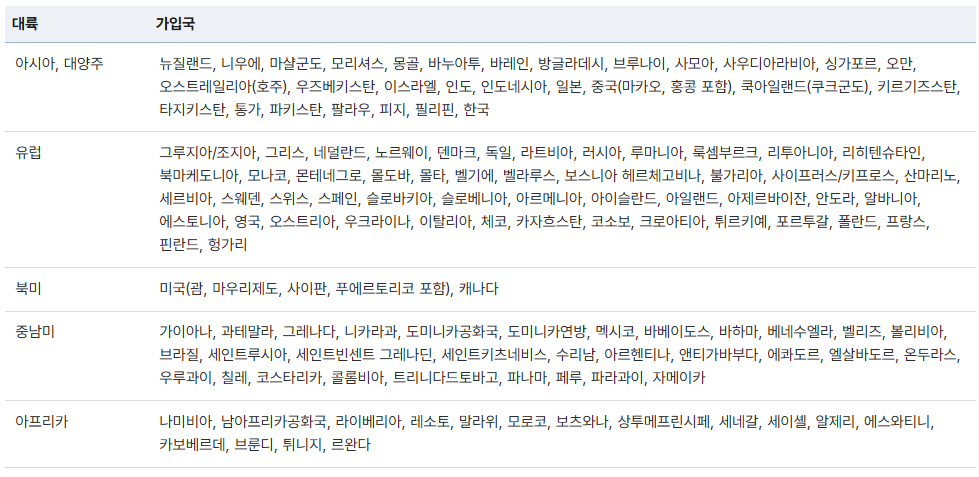
Apostille vs. Consulate Verification (Embassy Verification)
Apostille is not accepted in all countries. The process is completely different depending on whether the country you wish to submit to has joined the Apostille Convention.
| Classification | Apostille | Consulate confirmation + Embassy authentication |
|---|---|---|
| Applies to | Convention signatory countries (129 countries) | Countries that have not joined the agreement |
| Procedure | Apostille issued by Overseas Koreans Office (or Ministry of Justice) → End | Consular authentication at the Office for Overseas Koreans → Embassy authentication at the relevant embassy in Korea |
| Required steps | Step 1 | Step 2 |
| Time required | Same day ~ next day when applying in person | Addition of embassy processing period after consular authentication (varies by country) |
| Major countries involved | USA, Japan, China, Indonesia, Saudi Arabia, most of EU | Vietnam (~2026.09), UAE, Qatar, Kuwait, Iraq, Ethiopia, etc. |
For example, Vietnam is currently a non-joining country that requires consular authentication + embassy authentication, but it completed the process of joining the convention on December 31, 2025, and apostille is scheduled to be applied from September 2026. Currently, companies that need to send documents to Vietnam still need to go through the embassy authentication process, but from the second half of next year, only Apostille will be sufficient. (Source: Vietnamese Government Resolution No. 407/NQ-CP, 2025.12.12 / vietnam.vn)
Since the list of member countries is constantly changing, you must check the latest list at the time of submitting documents. The latest list of countries that have signed the Apostille Convention is: Homepage of the Office of Overseas Koreans (oka.go.kr) or The Hague Conference on Private International Law (hcch.net) You can check it in.
Apostille issuance procedure: corporate practice standards
Let me show you the entire flow first.
(1) Preparation of documents → (2) Classification of official/private documents → (3) Notarization of private documents → (4) Issuance of Apostille by the Office of Overseas Koreans → (5) Submission overseas
(1) Document preparation
Documents required by overseas submissions are issued. The types of documents frequently required by businesses are as follows:
- Business registration certificate, financial statements, certificate of all registered details → Official documents
- Articles of Incorporation, Board of Directors Meeting Minutes → Private Documents (Documents issued by the company)
- Employment certificate, career certificate → private document
- Various licenses, export-related certificates → official or private documents depending on the issuing agency
(2) Distinguish between official and private documents
The reason why this judgment is important is because private documents must first be notarized before an Apostille can be issued.
Official document: Documents issued by national agencies, public institutions, and public schools. This includes business registration certificate, certified copy of corporate register, certificate of graduation from a national or public university, certificate of entry and exit, etc.
Private document: Documents issued by the private sector. This includes company articles of incorporation, certificates from private universities, various powers of attorney, and translations.
You can apply for an Apostille directly for official documents, but private documents must be notarized at a notary office to be eligible for an Apostille.
(3) Notarization of private documents
Take the documents to the notary office and have them notarized. In the case of translations, translation must be notarized (certification that the translation is accurately translated based on the original).
(4) Apostille issued by Overseas Koreans Office
There are two Apostille issuing agencies in Korea.
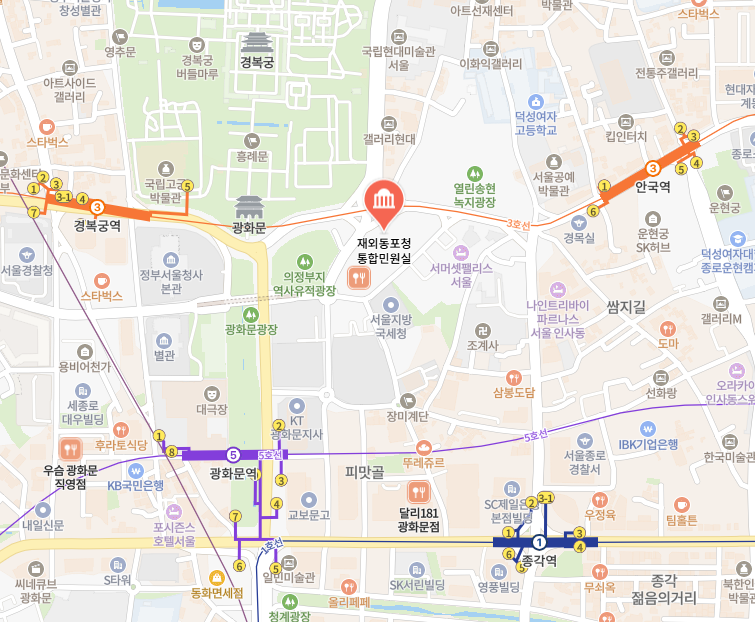
- Integrated Civil Service Office of the Overseas Koreans Office (15th floor, Building A, Twin Tree Tower, 6 Yulgok-ro, Jongno-gu, Seoul)
- Ministry of Justice (documents related to prosecution and court)
| How to apply | Processing period | Fee |
|---|---|---|
| In-person registration | Same day ~ Next day | 1,000 won per case (electronic revenue stamp) |
| Mail application | Normally 7-10 days | 1,000 won per case + registered postage fee |
| Online (some official documents) | Immediately to several hours | Free |
(Source: Office of Overseas Koreans website / oka.go.kr) The Office of Overseas Koreans issues online Apostilles for 42 types of official documents free of charge. It can be issued overseas as long as you have a public certificate.
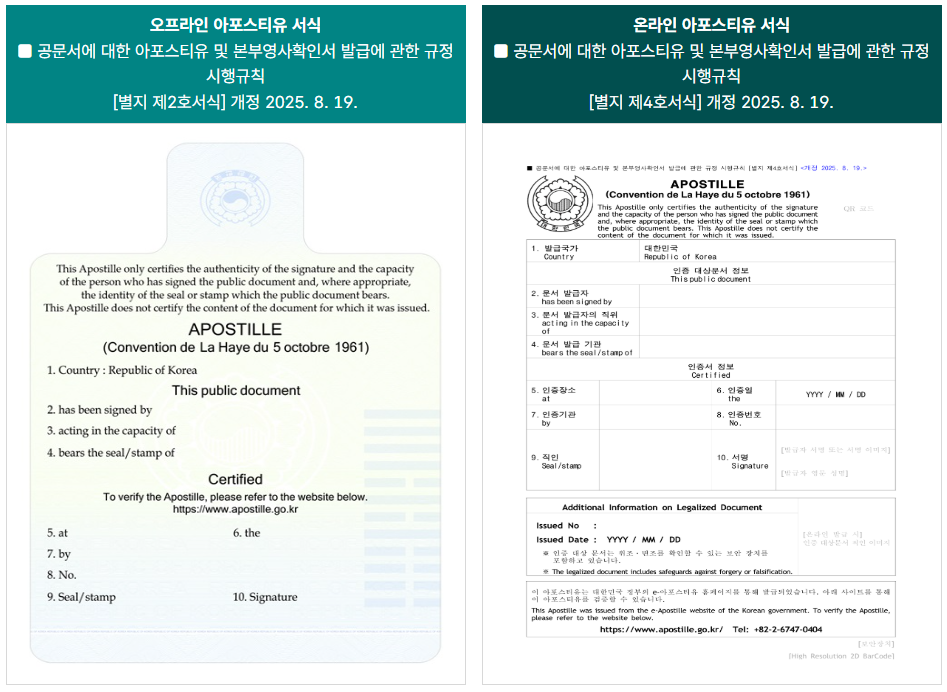
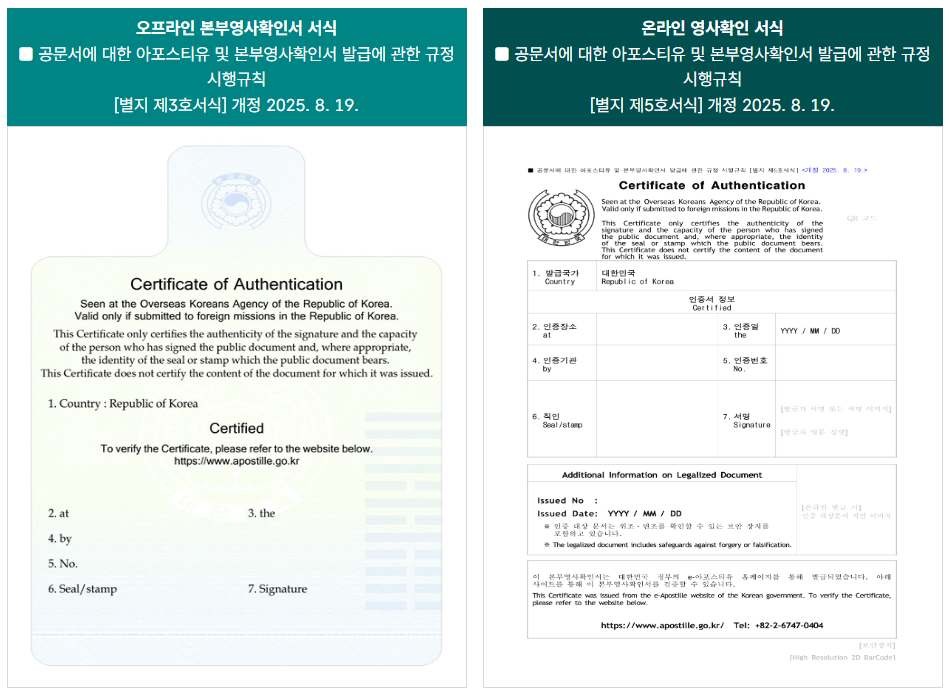
(5) Overseas submission
You can submit documents with Apostille attached to an overseas submission office. It is recognized immediately without any separate embassy verification process. The actual issued Apostille is issued as a sticker on the back of the document.
3 things corporate managers often miss
This is a mistake pattern seen repeatedly in the field.
1. Issued “for viewing” and returned
When issuing documents at Government 24, Supreme Court Internet Registry Office, etc., there are cases where “for viewing” and “for submission” are separated. The document for inspection has no legal effect, so the issuance of an Apostille will be refused. It must be issued “for submission”.
2. Apostille omitted in translation
There are cases where an Apostille is only accepted for the Korean original, but not for the translated text. In principle, the Korean original and the translation are separate documents, so they must each receive an Apostille. Since the translation is a private document, it is notarized → Apostille.
However, depending on the country or place of submission, there may be cases where an Apostille translation is not required, so it is best to check with the place of submission first.
3. Only receive an Apostille and send it to a non-registered country
The country to which you are submitting is a country that has not signed up to the Apostille Convention, but if you only receive an Apostille, it will not be recognized locally. Non-member countries require consulate confirmation + embassy authentication. Before preparing documents, be sure to check whether the target country has joined the convention.
Frequently Asked Questions
Q. Does an Apostille have an expiration date?
The Apostille itself does not have an expiration date. However, if the original document with the apostille attached has an expiration date (e.g. 6 months for a criminal record certificate), the document itself loses its validity after that period, so in practice, it should be viewed based on the expiration date of the original document.
Q. Can documents issued in English also receive an Apostille?
Yes, it is possible. Even if the original language is not Korean, such as an English transcript or English business registration certificate, an Apostille can be issued if the document was issued by a Korean institution.
Q. Can a company employee obtain an Apostille on behalf of the company?
Yes, proxy application is possible. You can download a sample letter of attorney from the website of the Office of Overseas Koreans, fill it out, and submit it. Please note that there is a separate application form for applying in the name of a company.
Q. What if an overseas branch needs to send local documents to Korea?
In that case, it's the other way around. For documents issued in that country, you must obtain an Apostille from a local Apostille issuing agency. Apostilles for foreign documents cannot be issued in Korea.
Q. Are Apostille and translation administrator certification different?
Yes, it's a completely different procedure. Translation administrator certification certifies the accuracy of a translation by a foreign language translation administrator, and Apostille is a certification to internationally recognize the public validity of a document. In some countries (USA, Canada, Australia, etc.), it is possible to submit a translation with just a translation administrator certification, but in many cases a separate Apostille is required, so be sure to check the requirements for the submission destination.
Source summary
| Grounds | Confirmation location |
|---|---|
| Apostille Convention (1961 Hague Convention) | hcch.net |
| List of countries that have signed the Apostille Convention (as of March 30, 2025) | Overseas Korean Office oka.go.kr |
| Information on Apostille issuance procedures and fees | Overseas Koreans Office oka.go.kr |
| Vietnam joins the Apostille Convention (Resolution 407/NQ-CP) | vietnam.vn |
| 42 types of documents subject to online Apostille | Office of Overseas Koreans apostille.go.kr |
The above information can be checked directly on each organization’s official website. This article is intended to provide practical information, not legal advice, and the countries that have signed the Apostille Convention and the issuance procedures may change at any time. For specific issues, please be sure to seek professional advice.
Finishing
If you have read this far, you will have a general picture of what an Apostille is and how it is carried out.
However, in corporate work, there are many cases where dozens of documents are produced instead of just one or two, and in most cases, everything from distinguishing between official and private documents to translation, notarization, and apostille must be processed all at once. In particular, in cases where the requirements are different for each country, such as establishing an overseas corporation or export documents, if even one is missing, it will be rejected locally and the process will have to start again from the beginning.
In this case, it is more time- and cost-efficient to leave it to a company specializing in document authentication. Apostille service information Wow B2B document authentication solution You can check the details of the agency service at.
Apostille and document authentication, leave it to Nanum Global
We can provide accurate guidance if you let us know the country of submission, type of document (official/private document), quantity, and desired completion date.


