
Key Summary
- Estimate rangeFirst check which steps are included and what the additional costs are.
- One-stopMake sure you handle translation and notarization in one place.
- ResponsivenessAsk about response to rejection, embassy work in non-member countries, and progress record management.
There are frequently asked questions. “I received quotes from several places, but the prices are all different. What should I choose based on?”
It is a natural concern. Document authentication is not something we do often, so it is difficult to establish a standard for comparison. So most people make their decision based only on price, but this can become a problem later. This is the case when you start cheaply, but then costs are added at each stage, or it is rejected and you have to start over from the beginning.
In this article, we will summarize five good questions to ask when choosing a company. These questions are valid no matter which company you use.
First, what steps are included in the estimate?
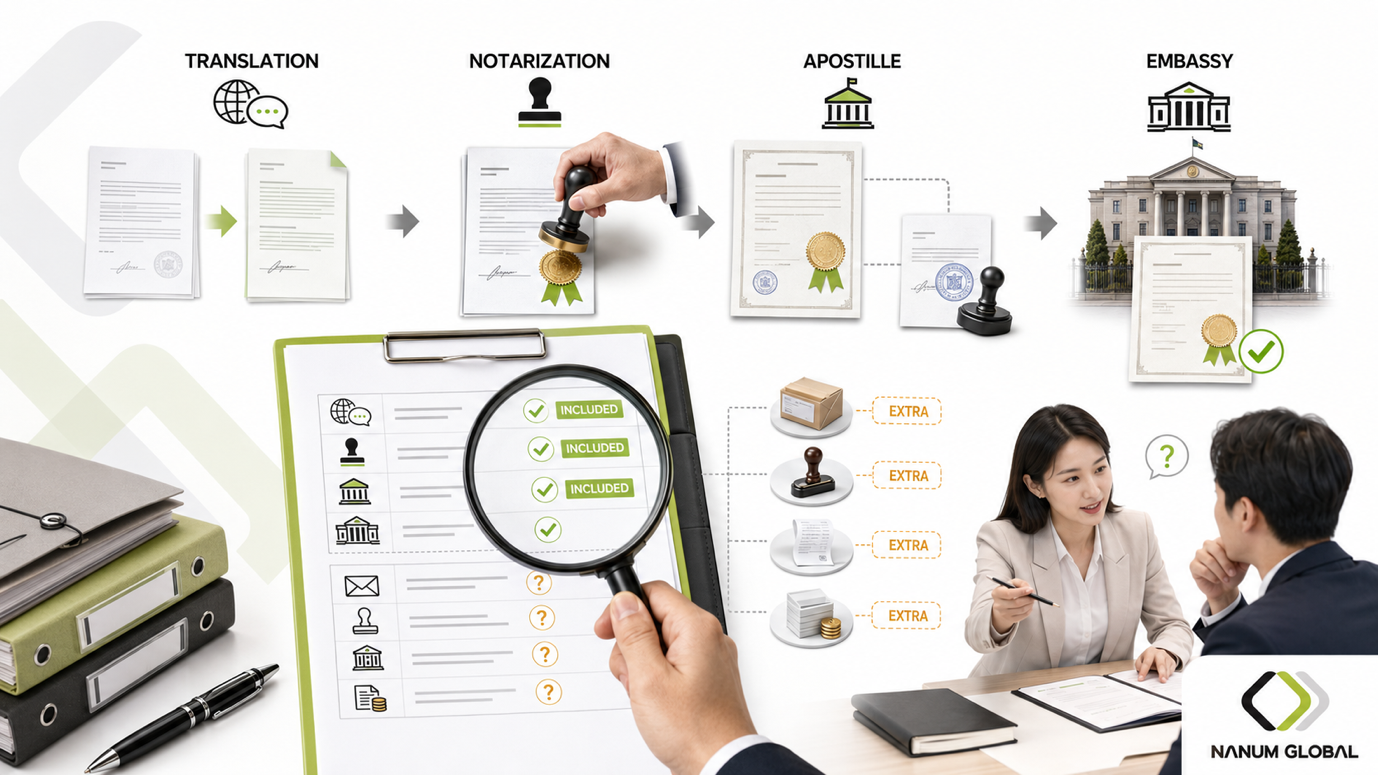
This is the first thing to check. Document authentication is divided into several steps. This includes translation, notarization, Ministry of Foreign Affairs Apostille or consular authentication, and embassy authentication if the country is not a member country.
If it is unclear how much of this is included in the amount presented by the company, additional charges may arise later. In particular, you should check whether the notary fee or government office fee is separate, or whether the shipping fee is included.
When receiving a quote, ask “What level is included in this amount and what additional costs may be incurred?” If this question cannot be clearly answered, communication may be difficult during the process.
Second, are translations and notarizations handled in one place?
This becomes important if your documents require translation.
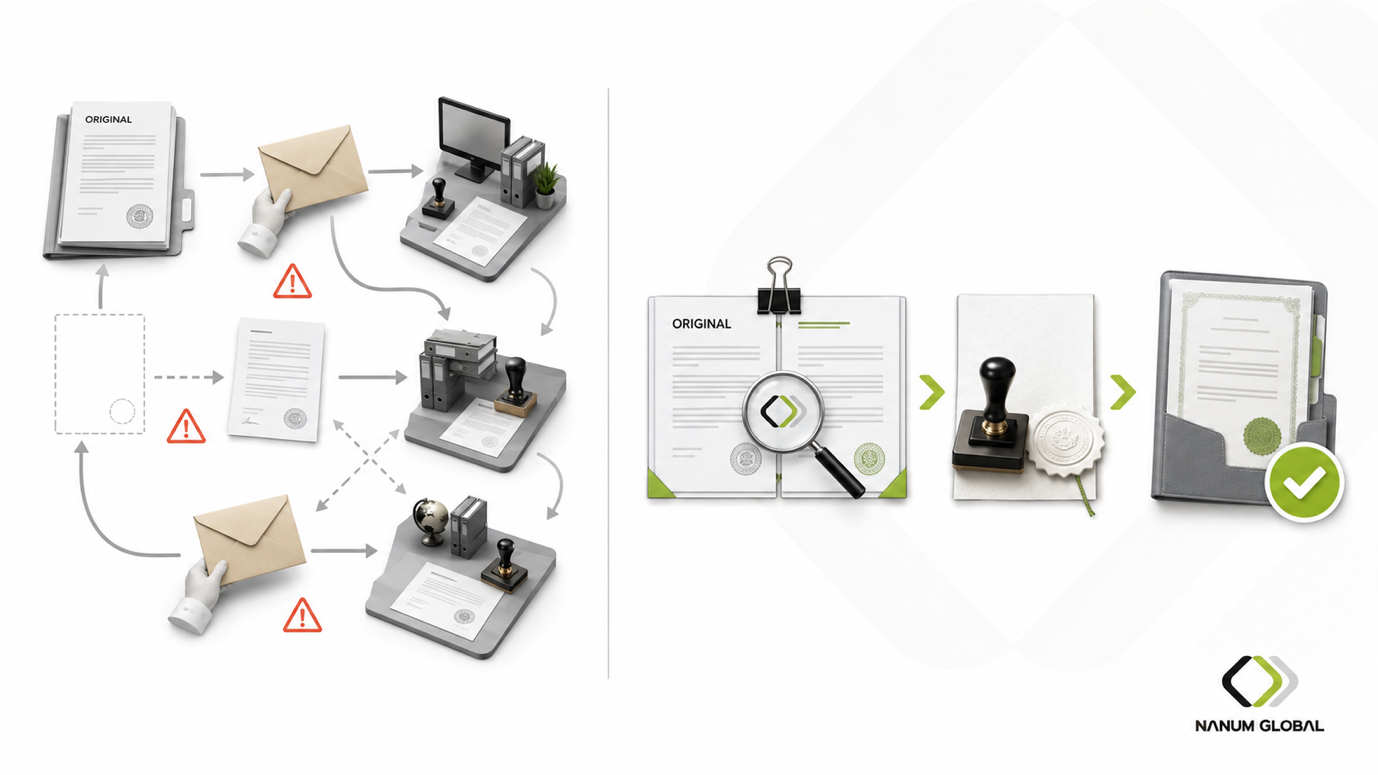
If you entrust the translation to a translation company, look into the notarization separately, and entrust the certification to another company, you will have to exchange documents at each step. In the process, time increases, and when a problem occurs, it is difficult to determine at what stage the mistake occurred.
In particular, translation certification is a point where rejection often occurs. There are cases where only the translation is certified and then rejected because the authenticity of the original cannot be confirmed locally. By looking at the translation and certification in one place, such combination mistakes can be filtered out.
Third, how do you respond when it is rejected?
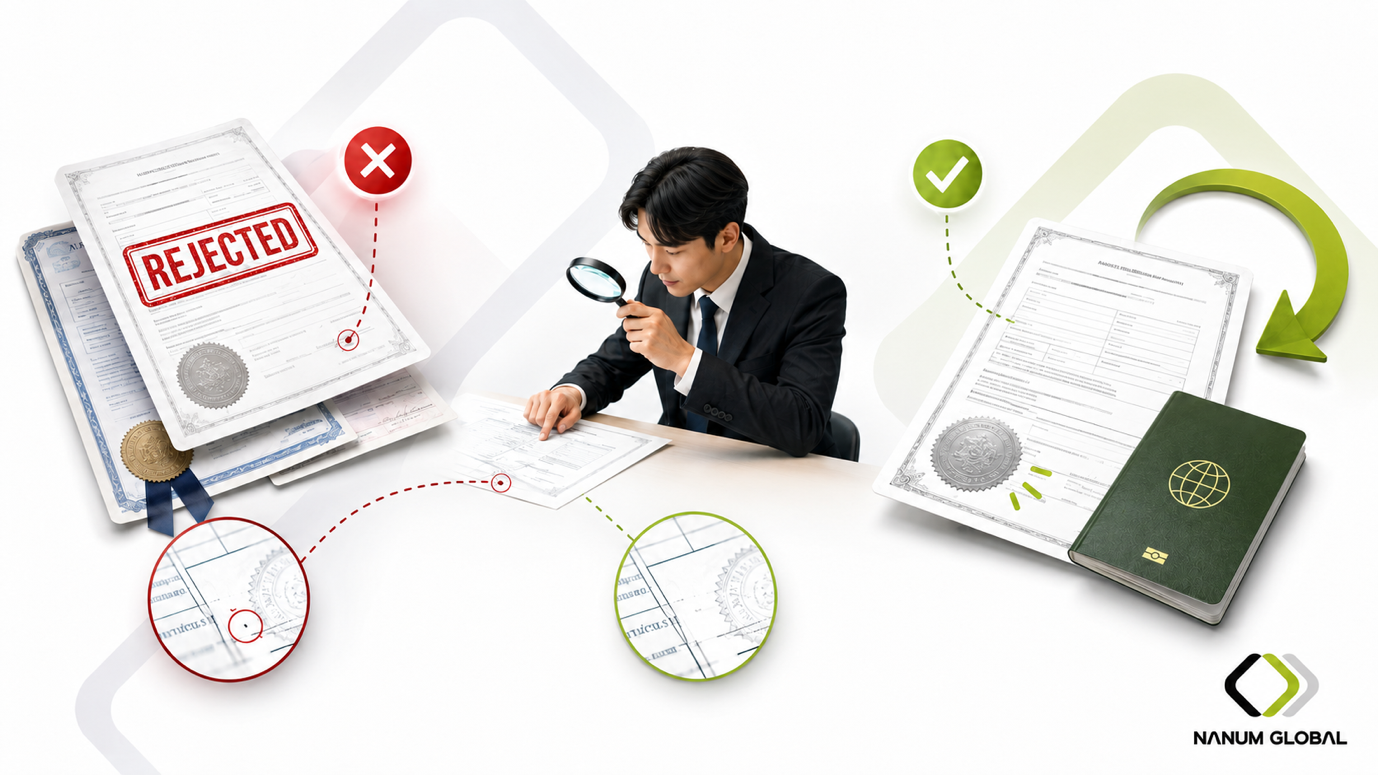
This is something you should definitely check, even if it feels awkward to ask in advance.
Document authentication is a task that can lead to rejection. Submission requirements may have changed, the document format may not have been correct, or the local agency's judgment may have been different. What matters is how you respond at that time.
You can ask whether the company will confirm the reason for the rejection and provide guidance on what steps to take again, and how to handle the rejection if it is a result of an error in judgment on the part of the company. If you check this before you start, it will be much easier if a problem arises.
Fourth, does it cover the work of embassies in non-member countries?
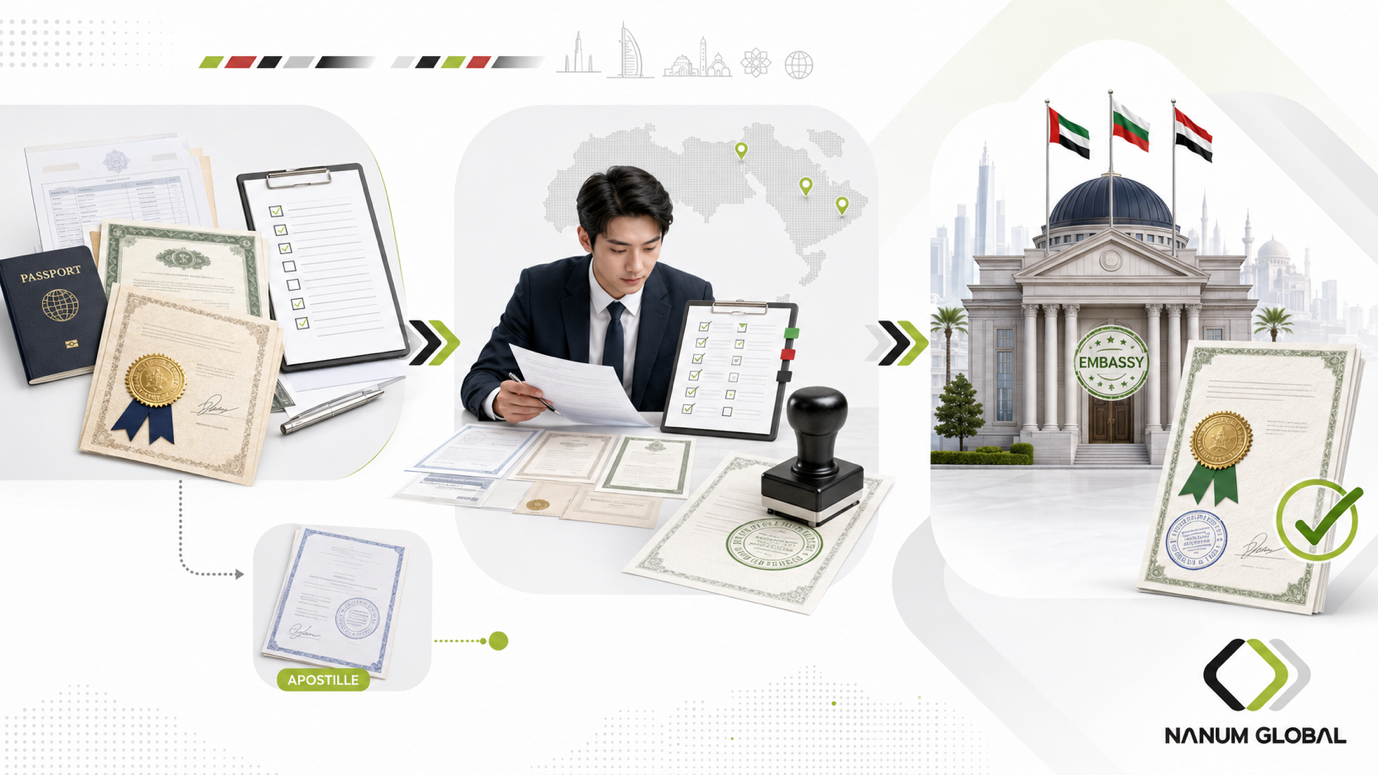
If the submitting country is not a party to the Apostille Convention, this part is different.
Membership to the convention is relatively simple, requiring only one step of Apostille from the Ministry of Foreign Affairs. However, for non-member countries such as the UAE, Iraq, Iran, and Egypt, you must obtain consular authentication and then obtain embassy authentication, and each embassy has different application requirements and operating methods. Some countries, such as the UAE, require additional authentication upon arrival.
If you have documents from an unregistered country, it is a good idea to check whether you have experience working at the embassy of that country. The scope of response is different between places that only handle Apostille and places that handle embassy work as well.
Fifth, do you keep records of progress?
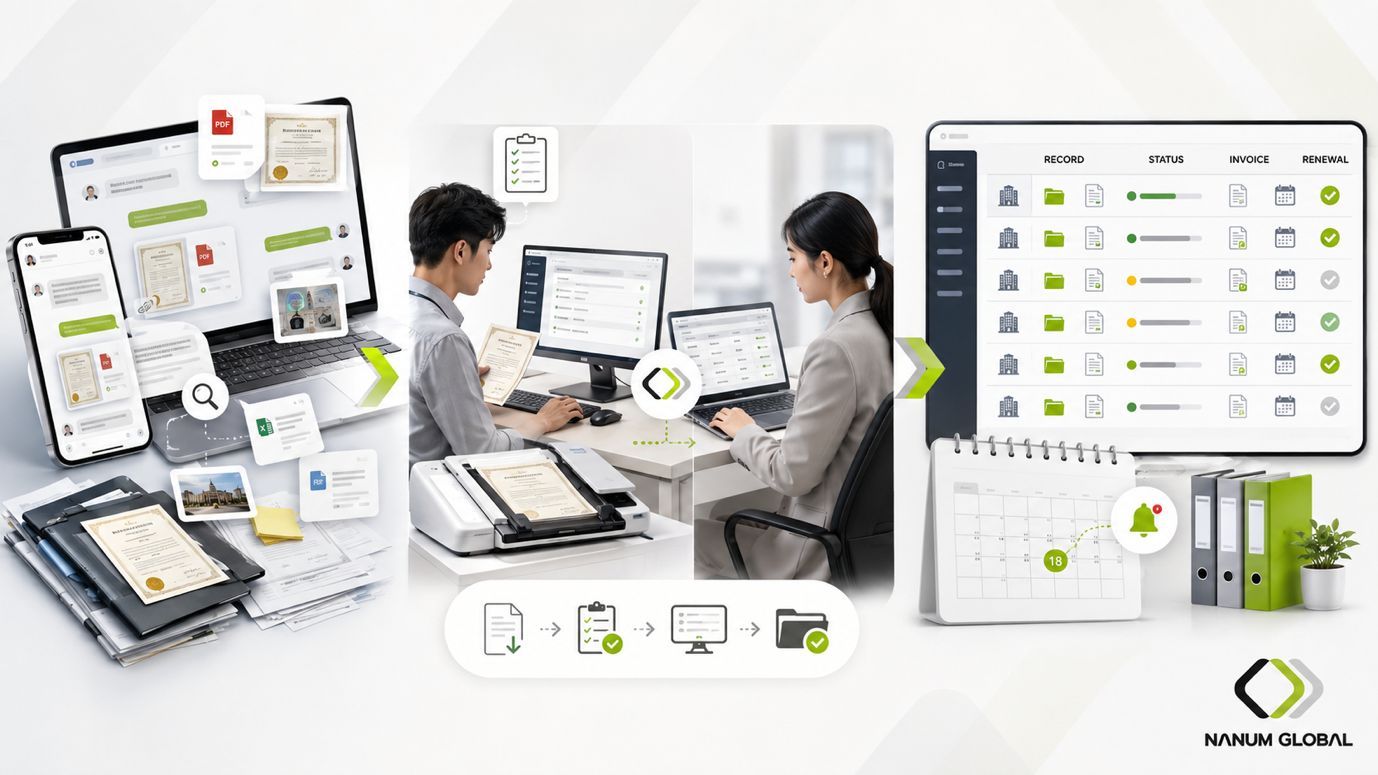
This is especially important for companies.
It may be convenient for the person in charge to communicate on the fly through a personal messenger, but no records are left for later confirmation. As the person in charge changes or time passes, it becomes difficult to find which documents were processed, when, and under what conditions.
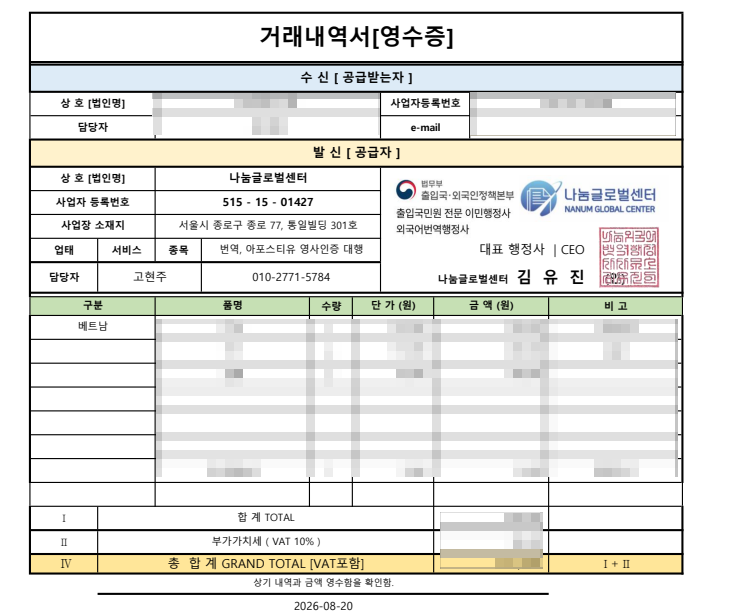
If you check whether the application details and progress are recorded and whether tax invoices or monthly settlements are possible, it will be much easier to manage repeated transactions. In the case of a power of attorney that has a document renewal cycle, you need to have a record to keep track of the next time.
How can I look at the price?
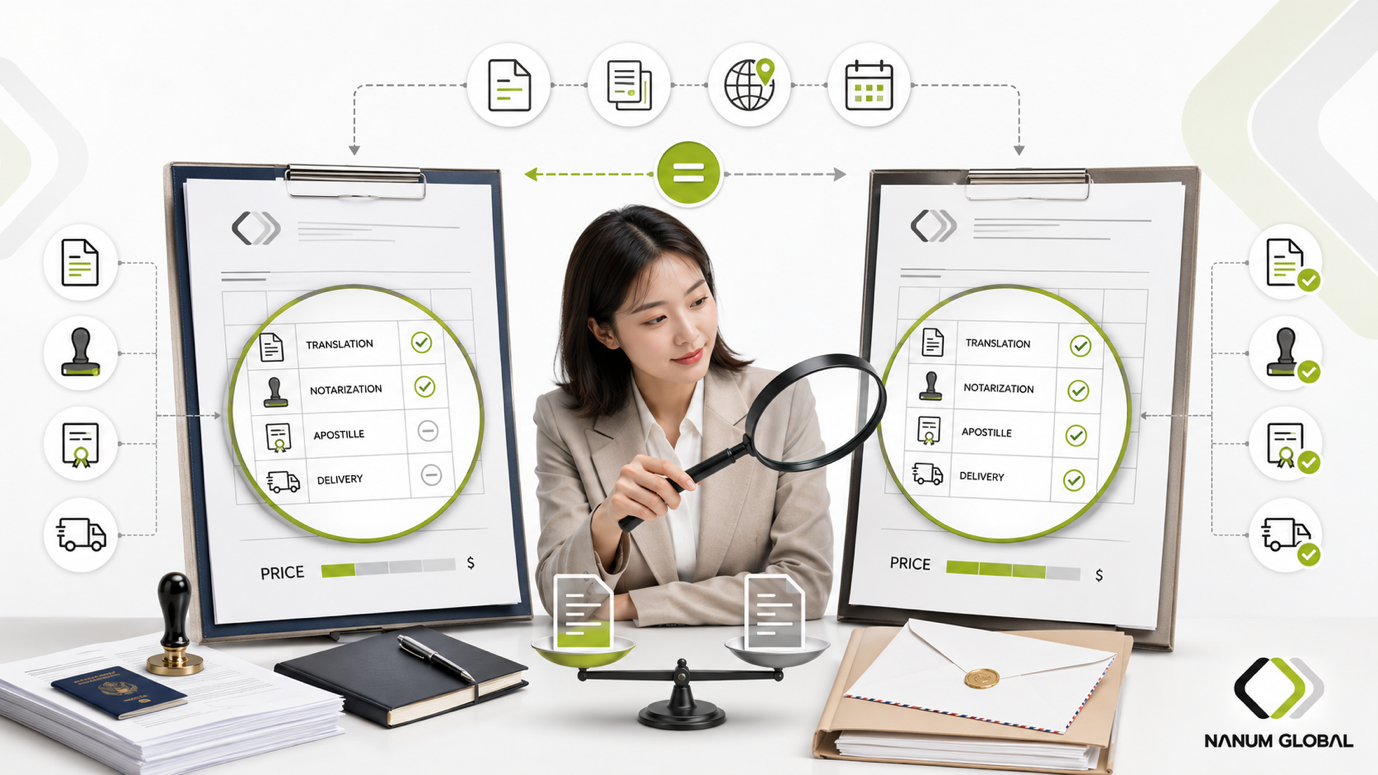
After checking five things, you can look at the price.
There is a reason for the price difference. It depends on what steps are included, how much translation is involved, and whether it is expedited or regular. It is meaningful to compare under the same conditions, so when receiving a quote, it is more accurate to provide the same document type, quantity, country of submission, and deadline for comparison.
If the estimate is too low, it is recommended to check the included range. Conversely, even an expensive quote may actually be reasonable if translation and notarization are included.
Frequently Asked Questions
Q. Can’t I just choose the place with the lowest price?
Under the same conditions, the lower price is more reasonable. However, if the steps included in the quote are different, comparison is not possible. You can check which steps are included and then compare.
Q. What should I tell you when receiving a quote?
Please let us know the type and quantity of documents, the country to be submitted, whether translation is needed, and your desired deadline to receive an accurate quote. If you ask a question without this information, any company will have no choice but to answer with a range.
Q. Where should I leave documents from non-member countries?
A place with experience working at the embassy of that country is safer. Each embassy has different application requirements, so if you don't have experience, you may not be able to pass the application the first time.
Q. It’s a company, but the person in charge changes frequently. How do I manage it?
It is recommended that you proceed in a way that the application details are recorded. It is difficult to check the history at the time of handover through personal messenger communication alone.
Q. I need to process it urgently, which is faster?
Whether express delivery is possible depends on the type of document and the processing status of the government office. Rather than a place that claims to be unconditionally fast, a place that clearly explains which documents are expedited and which documents are difficult is more trustworthy.
Conclusion
When choosing an agency, there are things to check before price. These include the scope of quotation, one-stop processing of translation and notarization, rejection response method, experience working at embassies in non-member countries, and progress record management. If you ask these five questions, differences between companies will be revealed, and if you compare prices on that basis, your judgment will become more accurate.
Nanum Global handles everything from translation to notarization, apostille, consular authentication, and embassy authentication in one place. We will also answer the five questions above as is. If you are comparing quotes, please let us know the type of documents, country of submission, quantity, and deadline. We will respond with a quote that clearly identifies the scope of inclusion.
Apostille agency, are you comparing quotes?
If you tell us the type of document, country of submission, quantity, and deadline, we will provide you with a quote with the scope of inclusion.


